Wheaton Epoxy Flooring has spent more than 20 years on epoxy-flooring in Westchester and across the western suburbs, and the floors we think hardest about are the ones that take a beating from fine grit. Some rooms see plain foot traffic. Others see a steady fall of mineral dust that works like sandpaper under every shoe, and those rooms need a different floor.
That difference shows up in the system we specify. A floor that collects abrasive dust needs as few seams as possible, a topcoat chosen for scratch resistance rather than shine alone, and a texture that gives grip without turning into a dust trap. Every one of those choices goes into a written proposal that names the product line, the number of coats and the finished thickness.
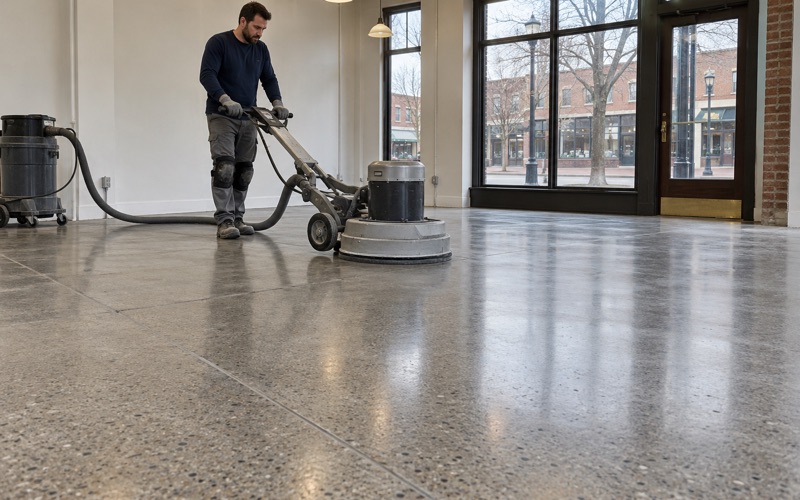
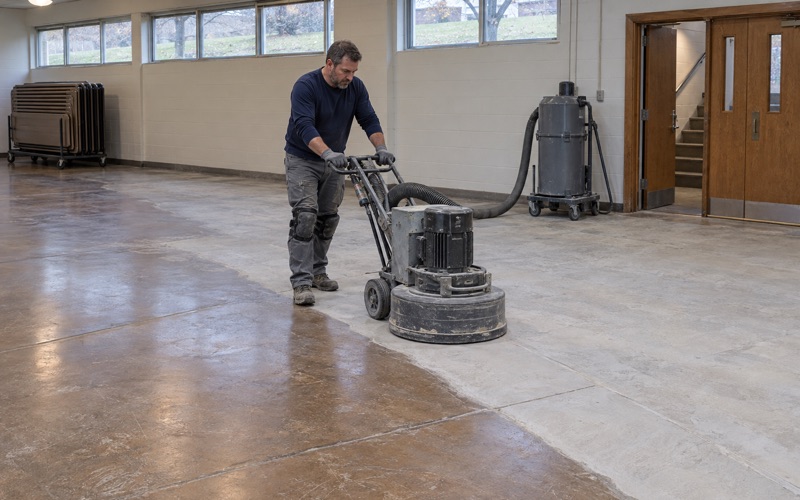
We also start every job the same way, clinic or garage. The slab is opened with a diamond grinder or a shot blaster, never an acid etch, and a moisture test sits in the written scope before the price is final.
An Orthopedic Office on Wolf Road and What Casts Leave Behind
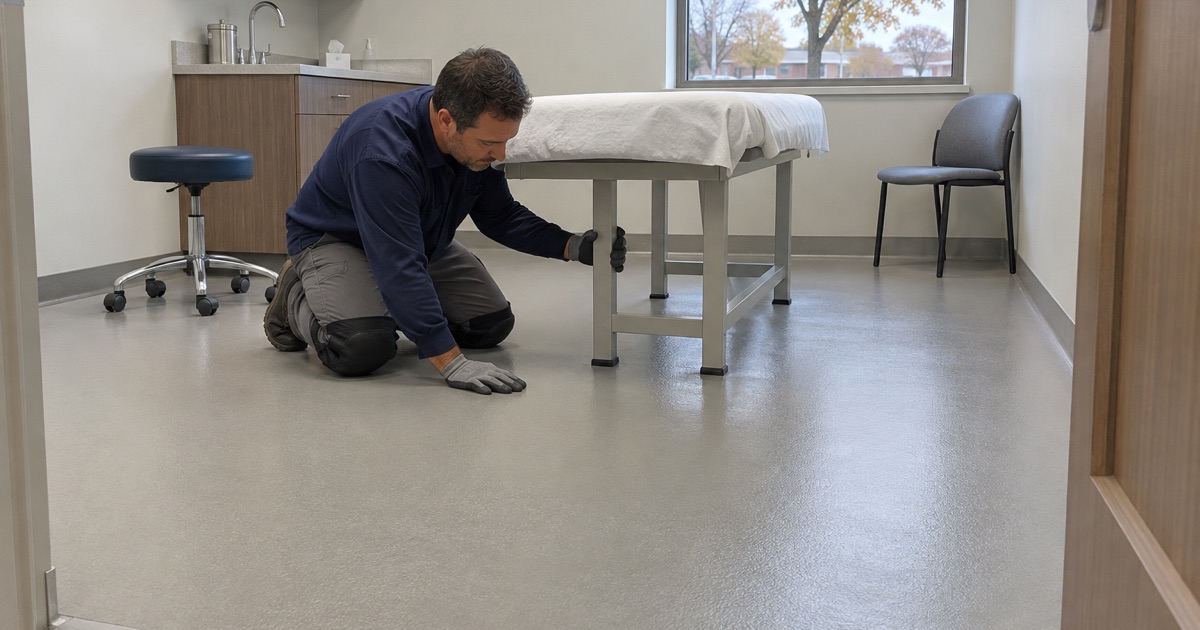
The clearest local example of a dusty floor is not a workshop. It is a medical office, and the dust comes from the treatment itself.
A full-service orthopedic office in Proviso Township
Midwest Orthopaedics at Rush runs a full-service orthopedic office on Wolf Road, inside the Village of Westchester in Proviso Township, Cook County. Its own location page lists an orthopedic clinic, an imaging center, a Bracing & Orthotic Office on the second floor, functional capacity evaluations, and a physical and occupational therapy clinic. Rush’s own pages note that surgery is not performed at this location.
We have no connection to that practice and have never seen its floors. We use it because it shows, better than any hypothetical, what a floor in a busy orthopedic setting is up against. The pattern holds for any clinic, therapy suite or brace shop where casts and splints are part of the day.
Plaster and synthetic casts, on and off
MOR describes its orthopedic technologists as experts in plaster and synthetic cast application who also remove casts. Putting a plaster cast on means wetting and smoothing a mineral material, and trimming it sheds fine particles. Taking one off means cutting through hardened plaster or fiberglass, which turns part of the shell into powder.
None of the location pages say which office handles casting, so we will not describe a particular room. What we can say is that wherever this work happens, the floor beneath the chair and along the path to the door receives a fine mineral residue many times a day.
What a cast saw adds to the floor
A cast saw cuts by oscillating rather than spinning, and it leaves a cloud of plaster and cast-saw dust behind. A 2022 study in the Greater Mekong Subregion Medical Journal classed the heavy noise and air pollution of cast removal as occupational health hazards and tested a collector aimed at reducing plaster dust during the procedure. A collector linked to a vacuum performed better than the alternatives in that study.
Even with good collection at the saw, some of that dust lands. It gets stepped on, carried down a hallway and pressed into whatever surface it meets, and that is where the floor choice starts to matter.
Looking for epoxy-flooring closer to Western Springs? See Epoxy-Flooring Services in Western Springs.
Why Abrasive Dust Dulls a Glossy Finish
Ordinary household dust is soft. Plaster dust is made of hard mineral particles, and that changes what happens when someone walks across it.
Mineral grit under a shoe
Flooring suppliers describe plaster dust as fine, abrasive particles that can scratch and dull a surface, especially when walked on or wiped away incorrectly. Each step drags a few particles across the finish, and thousands of steps a week leave a haze of tiny scratches. A high-gloss coating shows this first, because a mirror finish makes every scratch visible.
This is why a floor that looks perfect on day one in a clinic can look tired within months. The coating has not failed in the sense of peeling or lifting. It has simply been sanded, slowly, by the dust that the room produces.
Dust settles deep into gaps and joints
The same guidance points out that, unlike ordinary household dust, plaster dust settles deep into gaps and joints and is difficult to remove. It warns that sweeping can push it further into crevices. On a tiled floor that means grout lines; on a sheet floor, it means seams; on any floor, it means the gap at the wall and around fixtures.
Once dust packs a joint, it holds moisture from mopping and becomes a gray line that will not come clean. It also keeps feeding grit back onto the surface every time the joint is disturbed, so the abrasion never really stops.
Texture is a tradeoff here
Slip resistance matters in any clinic, but texture has a cost in a dusty room. Stonhard notes that excessive texture can trap dirt and debris and make floors harder to clean, and trade press makes the same point about highly slip-resistant surfaces. The aggregate type, size and shape set both the grip and the cleaning effort.
We specify slip resistance by the broadcast and topcoat we use, not as a slogan. In a room that sheds plaster, that usually means a fine quartz aggregate broadcast locked under the topcoat, enough to give footing without leaving deep valleys for dust to fill.
Seamless Floors and Hard Topcoats Where Dust Would Pack the Joints
The answer to dust that packs joints is a floor without joints to pack. The answer to dust that scratches is a topcoat built to resist abrasion.
Closing the gaps before they can fill
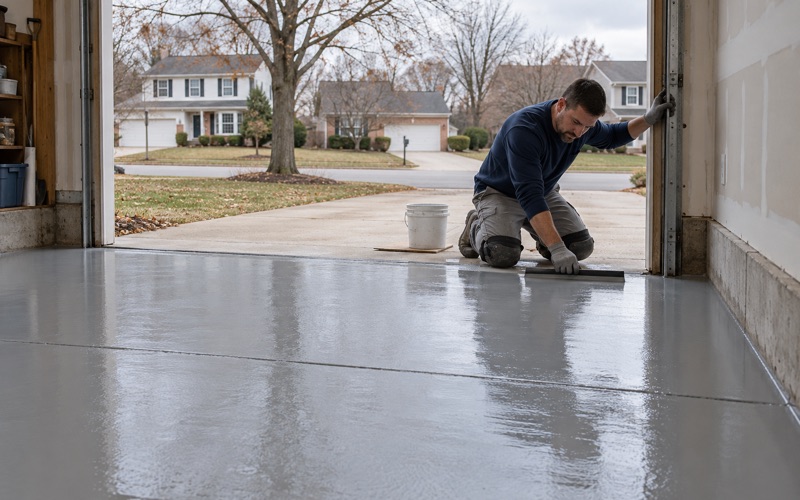
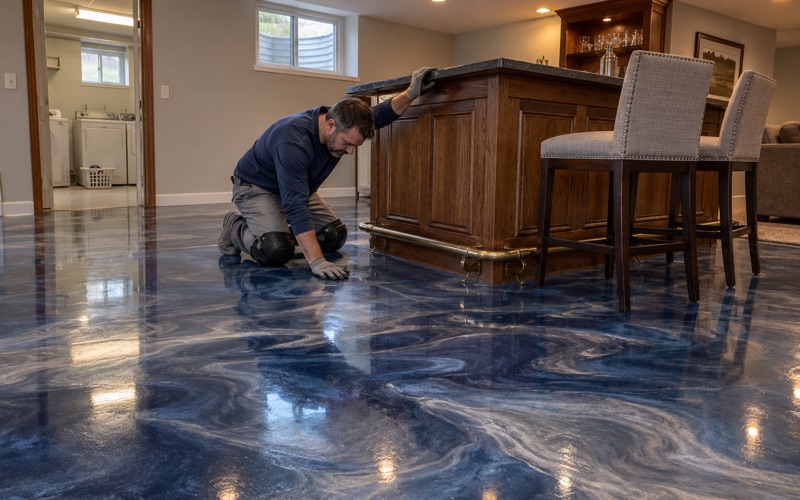
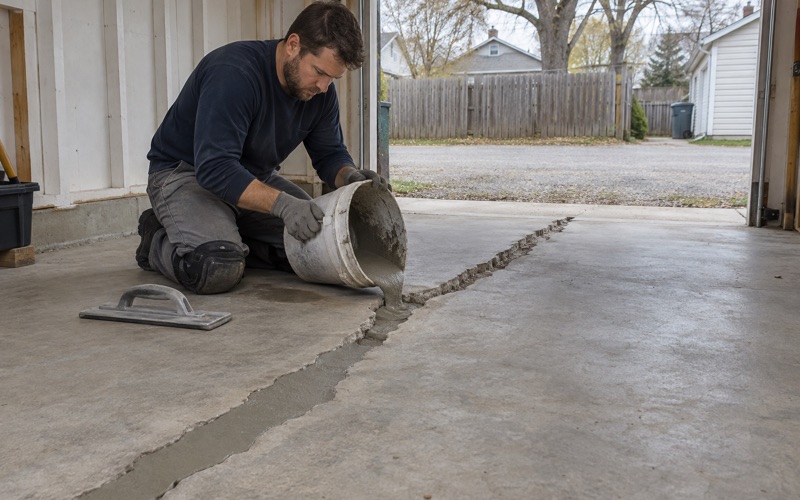
A resin floor is poured and rolled in place, so it has no grout lines and no seams across the open floor. We carry it up the wall as a cove where the room calls for it, which removes the corner gap where dust usually collects. Saw-cut control joints in the slab are handled deliberately, filled or honored according to whether they still move.
Before any of that, we map cracks, spalls and old coatings. If a slab needs repair or replacement before it should be coated, we say so up front, because a coating laid over a moving crack will open along the same line and give dust a new place to hide.
Abrasion-resistant urethane over epoxy
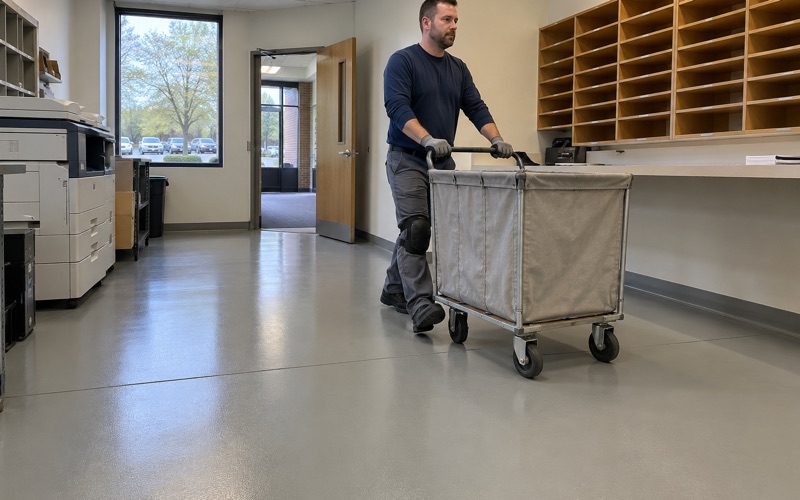
Our usual build in a dusty space is a 100% solids epoxy base for thickness and bond, finished with an abrasion-resistant urethane topcoat. The epoxy does the structural work. The urethane is the wear layer, and it is harder and more scratch-resistant than an epoxy left as the final coat.
We often recommend a satin rather than a high gloss in these rooms. Satin hides the fine scratching that any floor will pick up over time, and it can be renewed with a fresh topcoat years later without regrinding to bare concrete. The proposal states which topcoat, how many coats and the finished thickness, so a facility manager can check the floor against the quote.
Vacuum, then damp mop
Cleaning matters as much as the coating. The supplier guidance on plaster dust recommends a vacuum with a soft brush attachment, followed by a lightly damp mop, and we pass that on to every clinic client. Dry sweeping a mineral powder just pushes it around and grinds it into the surface.
A seamless floor makes that routine work. With no joints to hold dust, the vacuum lifts nearly everything on the first pass, and the damp mop picks up the film that remains. Over a year, that routine is the difference between a topcoat that dulls and one that keeps its finish.
Working around clinic hours
A clinic floor usually cannot close for a week. We phase the work around opening hours, using overnight and weekend windows, and we set cure schedules by slab temperature and dew point rather than by the calendar. During grinding, dust is captured at the machine with a vacuum rather than rinsed toward a floor drain.
Plaster, Drywall and Grout Dust in Westchester Homes
Remodeling dust in basements
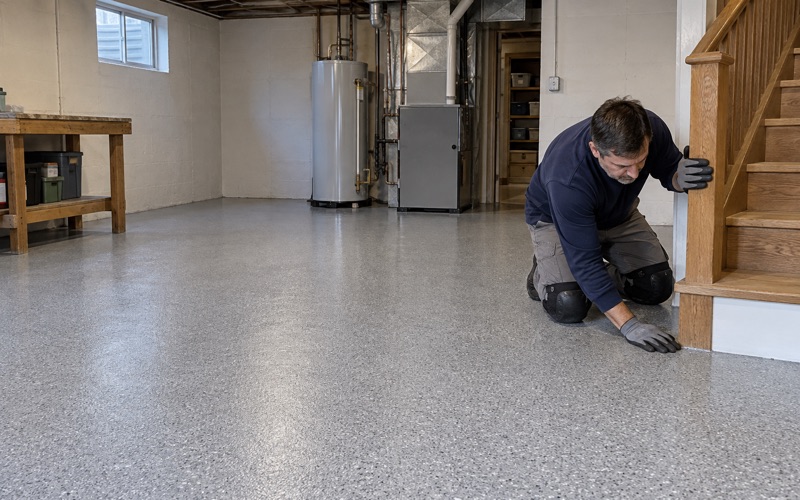
The clinic is the extreme case, but the same dust shows up in houses across the village whenever someone remodels. Drywall sanding, plaster repair on older walls and grout cutting all produce the same kind of fine mineral powder. In a basement, it drifts down stairways and settles on whatever floor is there, and if that floor is tile or an old painted slab, it packs the grout lines and the cracks in the paint.
We read a basement for past water before quoting any coating, because a floor coating does not stop sewer backup or seepage. Once that is settled, a seamless resin floor under a urethane topcoat gives a basement the same advantage it gives a clinic: dust stays on the surface, where a vacuum can reach it.
Garages that double as a workshop
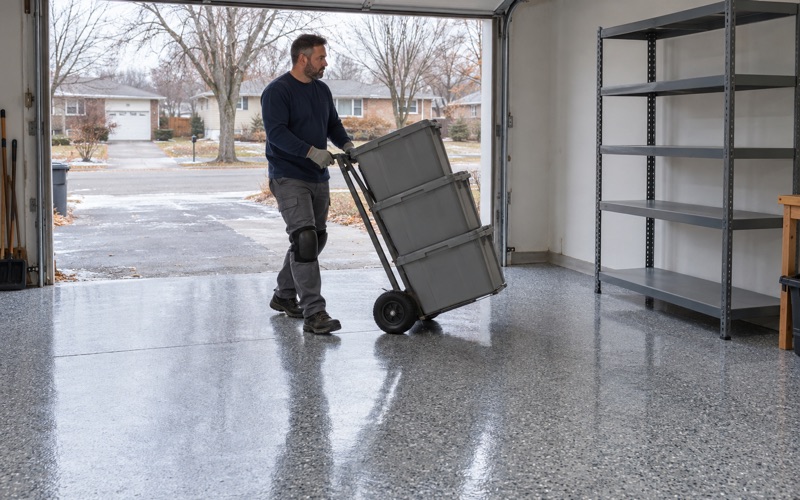
Plenty of Westchester garages become the staging area for a kitchen or bath project. Bags of thinset, buckets of joint compound and cut drywall all leave grit on the floor, and car tires then roll it back and forth across the coating. A garage system that resists that wear is also the one that holds up to the brine and rock salt that ride in on tires all winter.
We choose garage products inside the Illinois VOC limits for floor coatings, and we explain what a coating warranty excludes before the job is sold. Moisture is the first exclusion we name, because it is the one most often misunderstood.
Keeping a new floor clean during the next project
If a remodel is planned after the floor goes in, protect the coating with a breathable cover and vacuum under it often. Fresh topcoats are hardest when fully cured, so we give a cure schedule based on the actual conditions in the room. After that, the same vacuum-then-damp-mop routine that keeps a clinic floor sound will keep a Westchester basement or garage floor looking right for years.
- 20+ Years in Business
- Moisture Tested Before Pricing
- Free Written Estimates