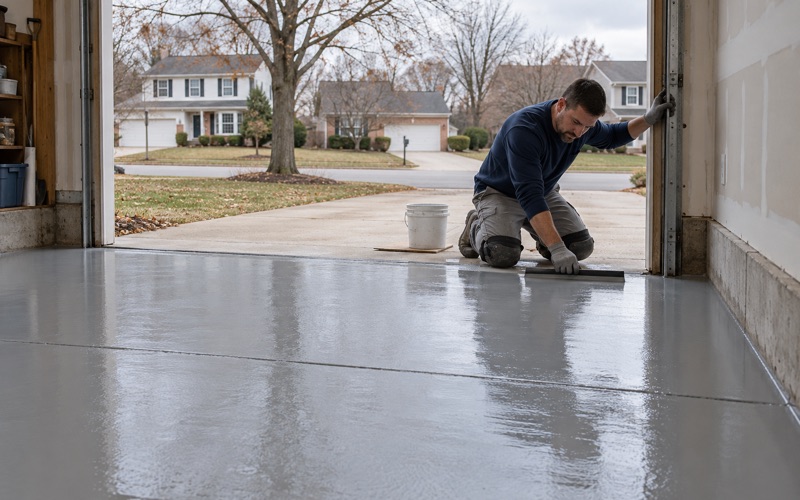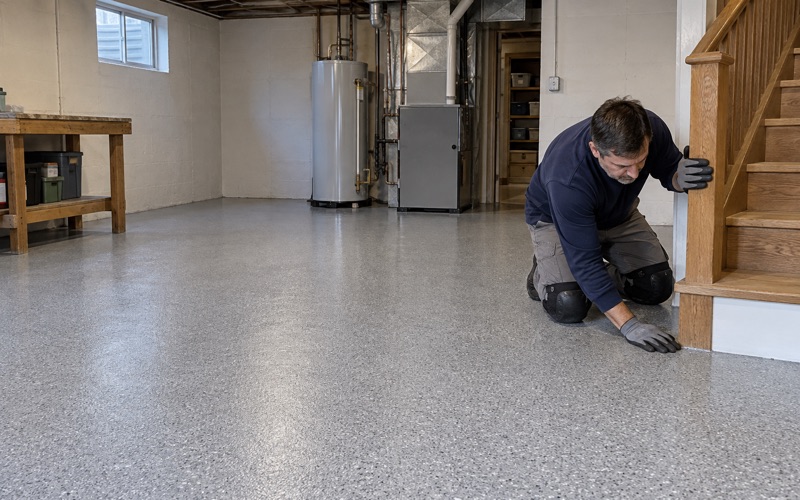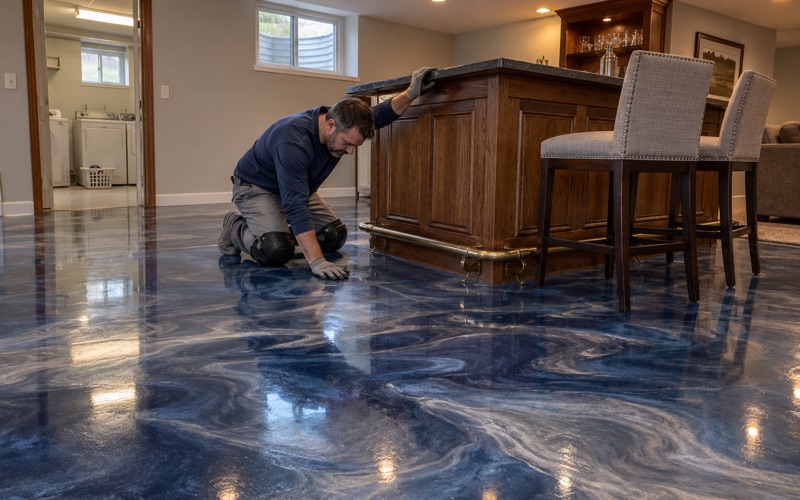
Wheaton Epoxy Flooring brings more than 20 years of coating work to epoxy flooring in Schiller Park, and most floors we price here already wear an earlier finish. A garage painted a generation ago, a shop slab with a tired epoxy, a basement sealed by a previous owner: each of those surfaces has to come off, or be proven sound, before anything new is bonded to it. That first step is where the work has changed the most this year.
A federal ban on commercial use of methylene chloride took effect on April 28, 2026, and it took the old solvent stripper off the table for floor work. Removal now happens with a diamond grinder or a shot blaster, run with dust collection and followed by wet or HEPA vacuum cleanup. We explain that method in the estimate rather than leaving it buried in a single line item.
Our proposals name the product line, the number of coats and the finished thickness, so the completed floor can be measured against what was quoted. A moisture test is written into the scope before the price is final. If a slab turns out to need repair or replacement before it should be coated, we say that plainly instead of coating over the problem.
A Village of Existing Slabs Beside O’Hare
No New Homes Since 2010
Schiller Park is a village in Leyden Township, Cook County, with 11,709 residents at the 2020 census and 4,514 housing units on 2.77 square miles. Census estimates show no units built in 2010 or later, and 62.5 percent of the stock dates from the 1950s and 1960s. That figure matters here for one reason only: every floor we would coat in the village is a slab that already exists.
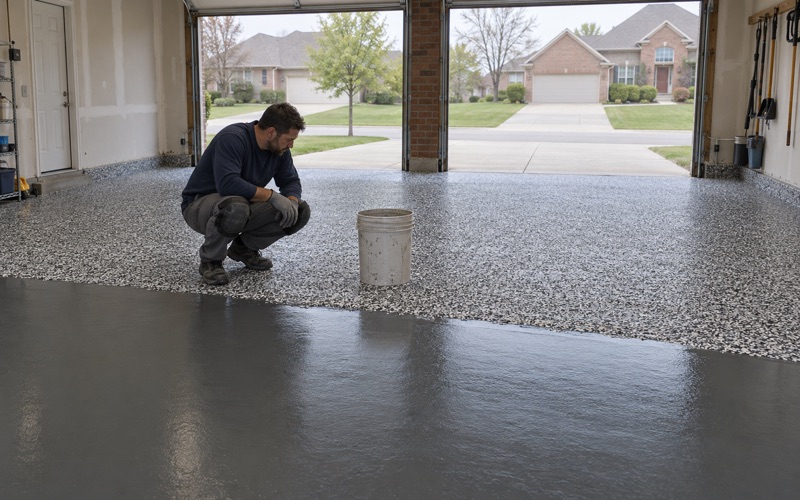
An existing slab rarely arrives bare. Over the decades most garage and basement floors pick up porch paint, a one-part epoxy kit, a clear sealer or a patchwork of all three, and any of them can sit between a new coating and the concrete it needs to grip. Recoat work in Schiller Park therefore starts with the question of what is already on the floor.
Reading the Old Coating First
Before we price anything, we map the cracks, the spalls and every area of old coating, and we note where the existing film is still tight and where it lifts with a scraper. A coating that peels in sheets in one bay and holds hard in another means two different removal efforts on the same floor. That map becomes part of the written scope, so you can see why one section of the slab costs more to prepare than the rest.
We also run a moisture test before the price is final, because an old coating can hide a damp slab as easily as it hides a stain. ASTM F1869 calcium chloride testing and ASTM F2170 in-situ relative humidity probes are the two methods we rely on, depending on the floor. When the numbers point to trouble, a moisture-mitigation primer or a different system goes into the proposal before anything is scheduled.
Looking for epoxy-flooring closer to Lemont? See Epoxy-Flooring Services in Lemont.
The 2026 Federal Ban on Methylene Chloride Strippers
What the Rule Says
Methylene chloride was the workhorse paint stripper for decades, the solvent that softened old paint and epoxy so it could be scraped up. Under the federal rule in 40 CFR Part 751, manufacturing it for most commercial uses was barred after May 5, 2025, distribution after January 28, 2026, and after April 28, 2026, all persons are prohibited from industrial or commercial use outside a narrow workplace program. For a flooring contractor, that last date ended the solvent as a way to take a coating off a slab.
Consumers lost access earlier. A separate section of the same rule has barred methylene chloride for consumer paint and coating removal since November 22, 2019, so a homeowner planning a weekend strip-and-repaint has been working without it for years. The 2026 date closed the commercial side, which is the side a hired crew works on.
The Aircraft Exception Stops at the Hangar Door
The rule keeps one paint and coating removal use alive: work on safety-critical, corrosion-sensitive components of aircraft and spacecraft, done under a workplace chemical protection program. That carve-out covers parts, not buildings, and it does not reach a hangar slab, a warehouse floor or a garage. O’Hare International Airport sits across Interstate 294 from the village, but the exception does nothing for the concrete next to it.
We are a floor coating contractor and do no aircraft work, so the exception has no bearing on how we remove an old finish. Every coating we take up after April 28, 2026, comes off by mechanical means. If a quote you receive leans on a methylene chloride stripper for a floor, that is a reason to ask questions before signing.
What the Ban Does Not Settle
The federal rule we read covers methylene chloride. It does not settle every other stripper chemistry on the market, and other products carry their own labels and their own worker exposure limits that we have not reviewed here. Where a stripper is used at all, its label has to cover the job, and we treat grinding as the default rather than the exception.
Grinding and Shot Blasting: Taking an Old Coating Off Now
Diamond Grinding
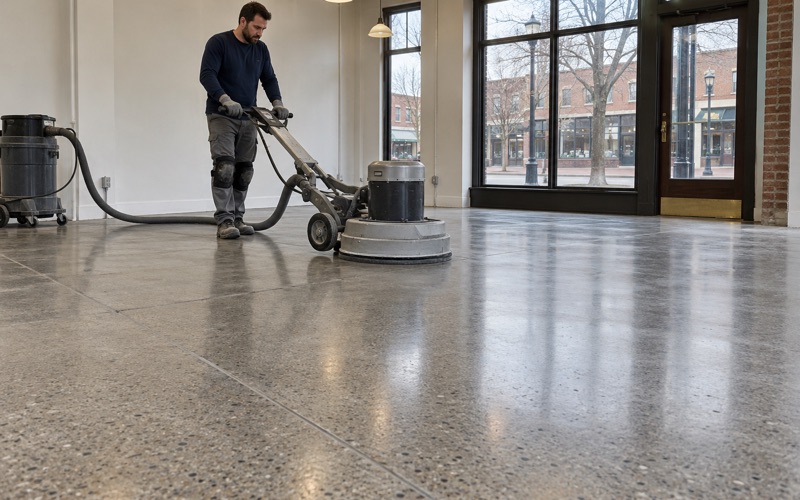
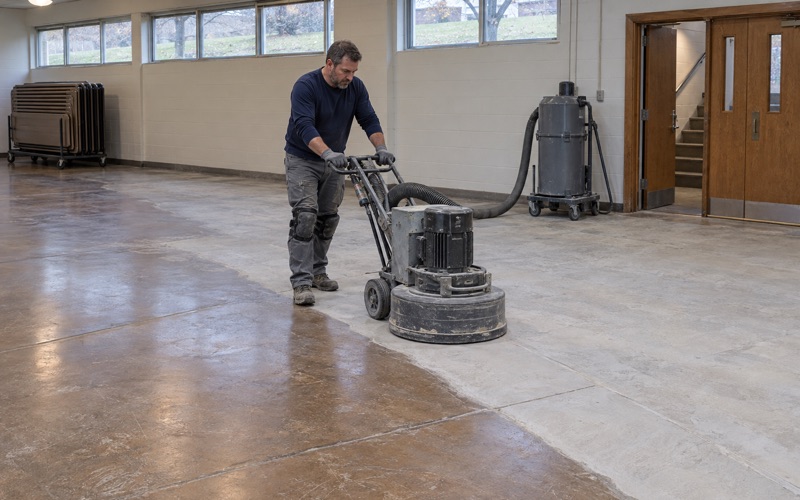
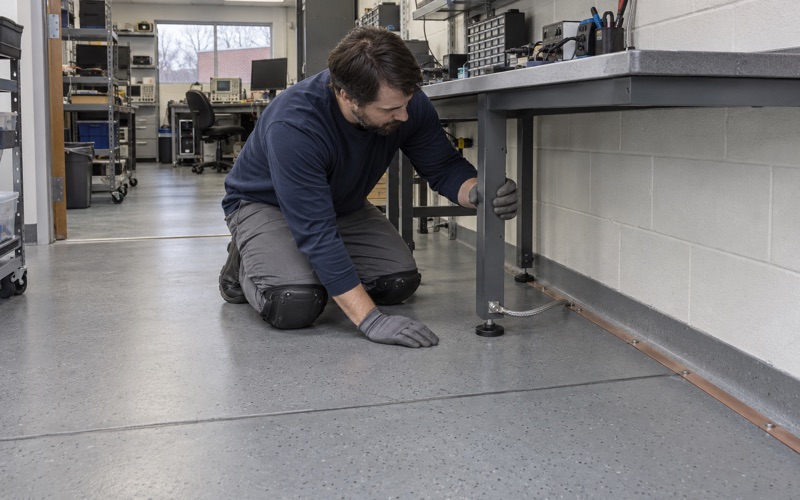
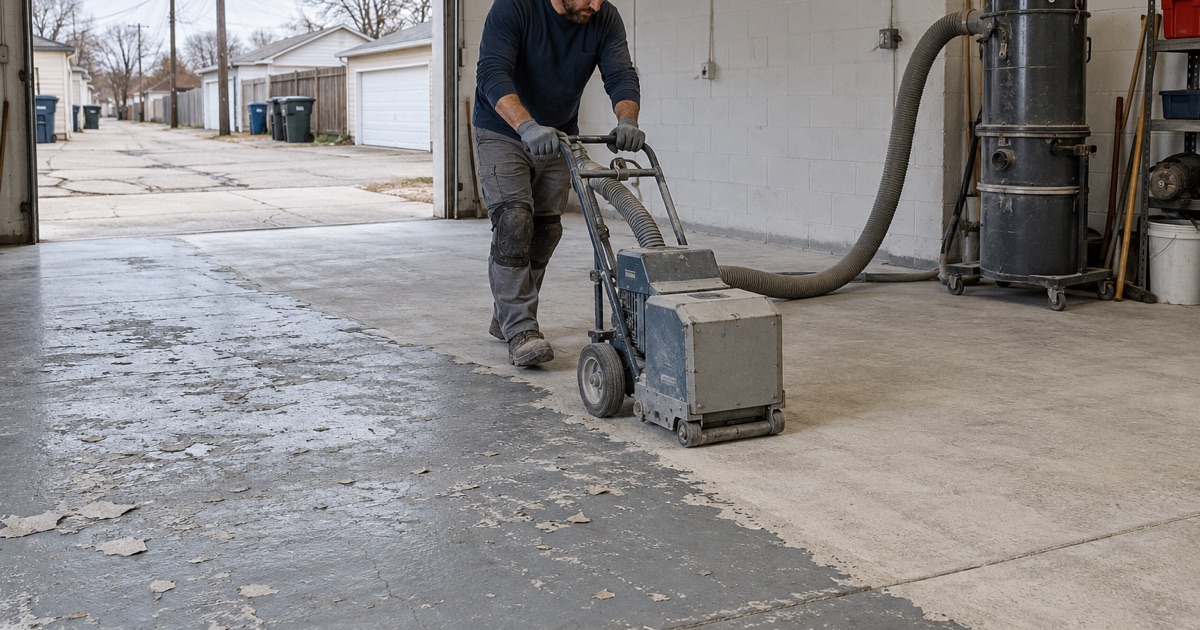
A planetary diamond grinder cuts through paint, epoxy and urethane and leaves an open profile in the concrete underneath. We choose the diamond tooling to match the coating, since a soft paint clogs a fine segment and a thick epoxy needs an aggressive one. Edges along walls and around posts get a hand grinder with its own shroud and vacuum.
Grinding is also how we open every slab, bare or coated, because we never use an acid etch. The goal is a measurable profile on the ICRI CSP scale that the new primer can lock into. On a recoat, the grinder does both jobs at once: it removes what is left of the old film and roughs up the concrete beneath it.
Shot Blasting
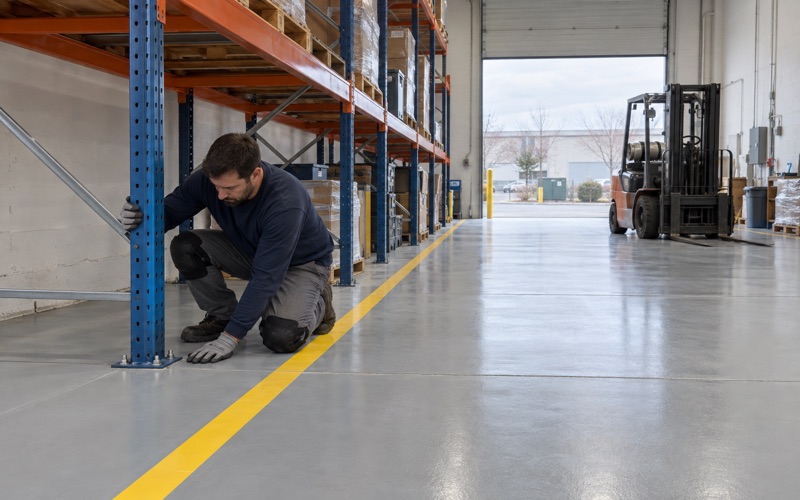
A shot blaster throws steel shot at the floor and vacuums it back up along with the broken coating and surface paste. It suits larger open areas and thicker or well-bonded films, and it leaves a deeper, more uniform profile than light grinding. The tradeoff is a coarser texture, which a thicker system or a broadcast layer then fills.
Many floors get both machines. The blaster handles the open field, and the grinder takes the edges, the corners and any patch where the old coating was tougher than the rest. Which mix fits a given slab comes out of the coating map, not a fixed formula.
When Removal Turns Up a Problem
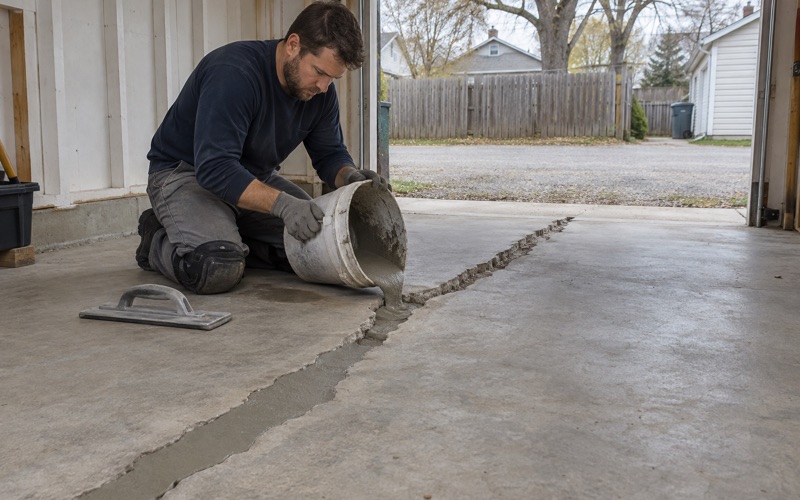
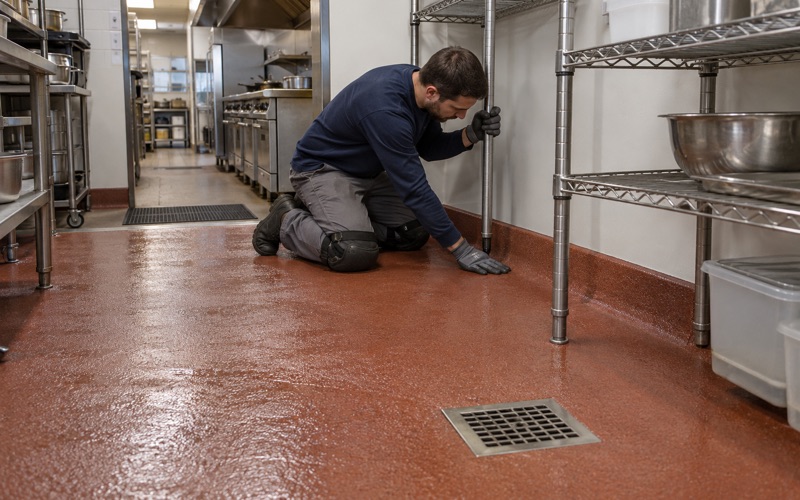
Taking an old coating off sometimes exposes what it was hiding: spalled patches, cracked joints or concrete too weak to hold a new system. We stop and show you what the machine uncovered before going further. Some floors need repair and some need replacement, and we would rather say so than coat a slab that will fail underneath the finish.
Dust Control, Cleanup and the Recoat Estimate
Collection at the Machine and No Dry Sweeping
Grinding and blasting concrete raises respirable crystalline silica, and OSHA’s silica rule calls for no dry sweeping of that dust. Our grinders and blasters run tied to dust collectors, so the dust is captured at the head rather than left to settle. Cleanup after removal is wet or done with a HEPA vacuum, never a broom.
We also keep grinding dust out of drains. It is vacuumed at the machine instead of being rinsed toward a floor drain or a storm inlet, which matters on a garage slab that pitches toward the driveway.
How the Ban Changes a Recoat Price
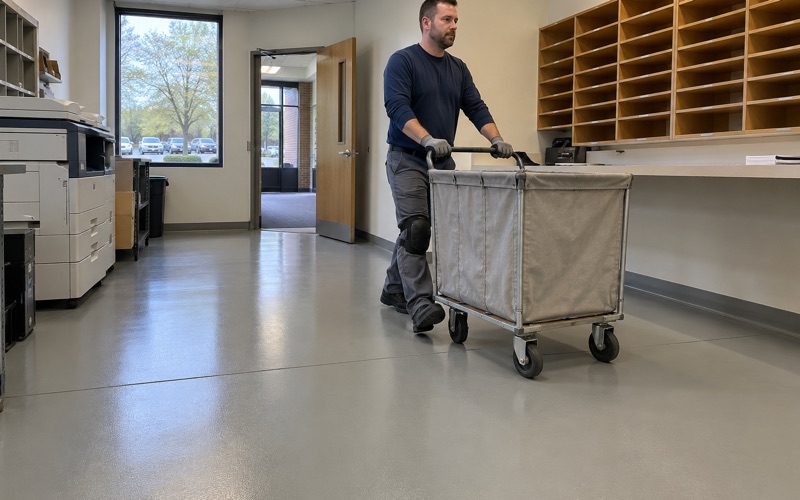
Removing an old coating mechanically takes equipment, dust collection, tooling and time. The removal line in our estimate reflects those costs, and it is priced separately from the new system so you can see each part. The coating that follows is chosen exactly as it would be on a bare slab.
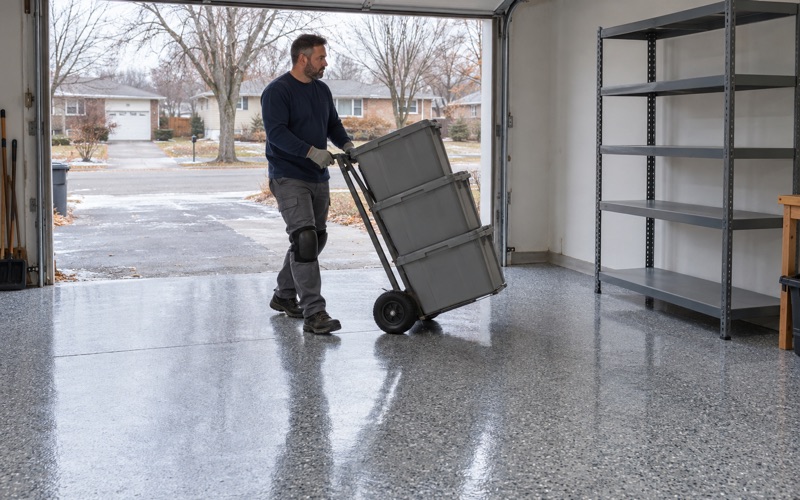
A thin, failing paint may come up quickly, while a well-bonded epoxy over a large garage takes longer and wears more diamonds. The coating map tells us which case a floor is before we quote it. Garage systems are then chosen to stand up to the rock salt and brine that ride in on tires all winter, and cure times follow slab temperature and dew point rather than the calendar.
Licensing, Contracts and Warranties
The Village of Schiller Park requires contractors to hold a village license before construction begins, registered through the Community Core app with scope, cost, insurance, bond and workers’ compensation as applicable. Licenses run May 1 to April 30 and renew each year, and we confirm that status and any permit question before a job goes on the calendar. Inspection questions go to the village’s Community Development Department.
Home jobs above the state threshold get a written contract and the Home Repair: Know Your Consumer Rights pamphlet before any grinding starts. We also walk through what the coating warranty leaves out before the job is sold, and moisture is the first exclusion we name. A floor coating is not radon reduction, and we never present it as one.
- 20+ Years in Business
- Moisture Tested Before Pricing
- Free Written Estimates