Wheaton Epoxy Flooring installs metallic epoxy floor systems in Wheaton, IL, serving surrounding cities including Winfield, Warrenville, Hinsdale, Wood Dale and Bensenville, backed by more than 20 years of grinding and coating concrete. A metallic floor is the most decorative system we offer, and it is also the least forgiving, because every flaw in the slab shows through the finish.
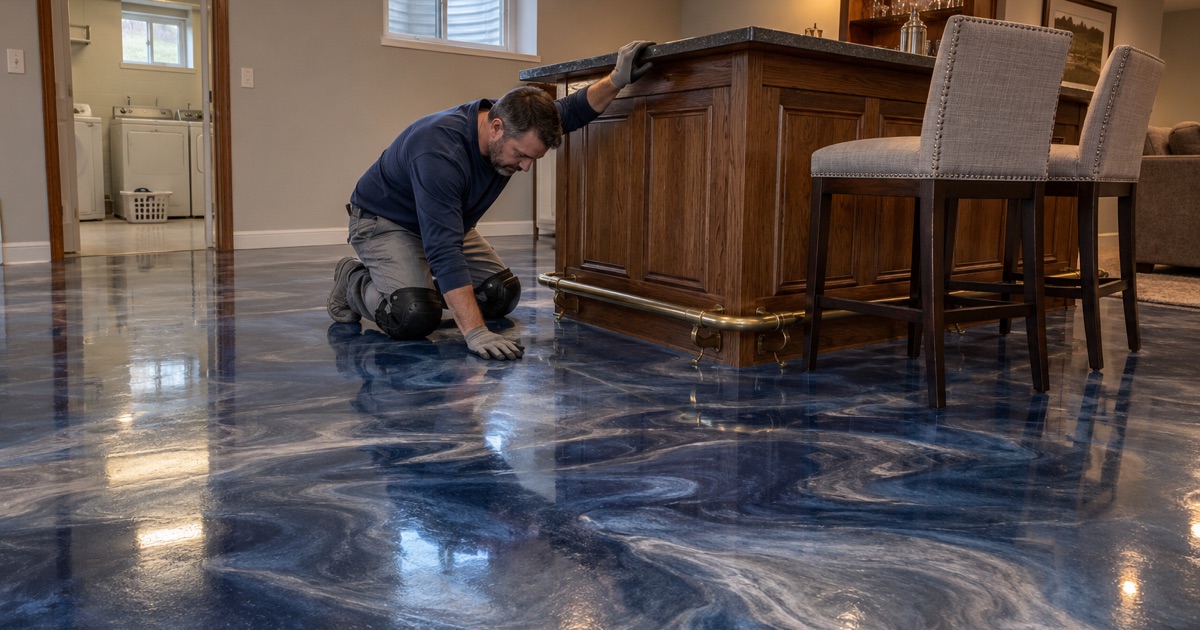
Metallic epoxy uses pearlescent pigments suspended in a clear epoxy. As the coating is worked and levels out, the pigment flows and settles into swirls, ripples and depth that look like polished stone or liquid metal. The look is created on the floor by the installer’s technique, not printed in a factory, which is why no two floors match.
Because the result depends so much on the slab, every metallic job starts with diamond grinding, a moisture test written into the scope and a crack and joint map. The proposal names the product line, the number of coats and the finished thickness, so the floor you get can be checked against the floor you were quoted.
How a Metallic Epoxy Floor Is Built
Grinding and Flattening the Slab
Metallic pigment settles into low spots and pools against high ones, so a slab that looks flat to the eye can still show waves in the finished floor. We diamond grind to open the surface and take down high spots, and we fill and grind low areas until the slab is ready to carry a self-leveling decorative coat.
Grinding runs with a vacuum attached to the machine, so the dust is captured at the head. That matters in a finished basement or an attached garage, where dust that escapes ends up on everything in the house.
Filling Cracks, Joints and Patches Flush
Cracks, spalls and old patches are mapped and filled before the metallic coat, then ground flush. Anything left proud or sunken will telegraph through as a line or a shadow. Control joints are either filled and coated over or made into a deliberate design line, and we decide that with you before the pour.
Where a slab has damage too deep or too active for a smooth decorative finish, we say so. A metallic floor over a moving crack will show that crack again, and a slab that needs replacement should be replaced before money goes into a showpiece finish.
Primer and Base Coat
A primer seals the ground concrete so it does not pull air or resin out of the metallic layer and leave pinholes. A colored base coat then sets the background tone that the metallic layer will move over. Dark bases give more contrast and depth, and lighter bases give a softer, cloudier look.
If the moisture test calls for it, a moisture-mitigation primer goes down at this stage instead. A metallic floor is too much work and too much money to risk on a slab that later pushes vapor up under the coating.
The Metallic Coat and Technique
The metallic epoxy is mixed in batches, poured and spread, then worked with rollers, trowels, brushes or air to move the pigment. Different techniques create lava-like veins, soft clouds or tight ripples. The installer has a limited working window before the epoxy starts to set, so the crew works in coordinated sections to keep the pattern consistent.
Conditions in the room affect the result as much as the hands working the material. Slab temperature and the dew point spread are checked before the pour, because a cold or damp surface slows leveling and can leave haze or amine blush in a finish that is meant to look like glass.
Topcoat for Protection
Metallic epoxy is beautiful but softer than a dedicated wear layer. A clear topcoat, often a polyaspartic or polyurea, protects the decorative layer from scratches and resists ultraviolet ambering where sunlight reaches the floor. The topcoat sheen and any added texture are chosen at the same time as the colors.
Choosing Colors and Movement
Single-Color and Multi-Color Blends
A single metallic color gives a calm, consistent floor with subtle movement. Two or three colors poured together create stronger veining and contrast. We show sample boards made with the same products and technique planned for your floor, so you are choosing from something real rather than an edited photo.
Multi-color pours also need a plan for where each color goes. We sketch the main flow lines on the slab before mixing, so veins run with the length of a room or toward a focal point rather than wandering in directions that fight the layout.
Matching the Room and Lighting
Metallic finishes change with light. Under bright overhead fixtures, the swirls stand out sharply, while in a dim basement the floor reads softer and darker. We look at the room’s lighting and windows before recommending colors, since a shade that glows in a showroom may look muddy in a basement with small windows.
We also consider how the floor sits beside cabinets, walls and furniture. A bold metallic can carry a room on its own, while a quieter blend works as a backdrop for everything else in the space.
Sheen and Slip Resistance
High gloss shows the most depth, but it also shows dust and footprints and can be slick when wet. Satin topcoats reduce glare and hide everyday wear, and a fine texture additive improves grip in areas that may see water. Grip is set by the topcoat and additive we specify, not promised as a slogan.
Where Metallic Epoxy Works Best
Finished Basements and Living Spaces
Metallic epoxy can turn a plain basement slab into a finished floor for a family room, bar area or home theater. The slab must test within the moisture limits first, and the basement must be read for past water, because a coating does not stop seepage or sewer backup. We explain the warranty exclusions for moisture before the job is sold.
Showcase Garages and Workshops
A metallic garage floor makes a striking showroom for a collector car or a home workshop. In a garage, the topcoat has to stand up to hot tires, road salt and brine, so we specify a hard, UV-stable finish and talk honestly about upkeep through a Wheaton winter.
For a garage that takes daily winter driving, many homeowners choose a flake system instead and keep metallic for a showcase space. We will tell you which fits the way you actually use the garage.
Showrooms, Offices and Salons
Retail showrooms, offices, salons and studios use metallic floors to make a strong first impression. These spaces often need work at night or over a weekend, and we phase the job around opening hours so the business can keep running. The written schedule shows when each area can take foot traffic again.
In commercial spaces, we also plan the floor around fixtures and display cases. Where those will be fixed in place, the metallic coat can stop short or run underneath depending on whether the layout is likely to change.
Caring for a Metallic Floor
Everyday Cleaning
Dust mop often and clean with a neutral cleaner. Grit is the main enemy of any high-gloss floor, so entry mats and quick cleanup of tracked-in sand and salt keep the topcoat looking clear. Harsh acidic cleaners and scrubbing pads can dull the finish and should be avoided.
Refreshing the Topcoat
Over years of use, a busy floor may show wear in traffic lanes. Because the metallic layer sits under a separate topcoat, that wear can usually be addressed by cleaning, abrading and recoating the topcoat rather than redoing the decorative layer. That keeps the original look while restoring protection.
- 20+ Years in Business
- Moisture Tested Before Pricing
- Free Written Estimates