Wheaton Epoxy Flooring has more than 20 years behind it, and our approach to epoxy flooring in Hinsdale starts with a plain question about any room an animal walks through: how many times a day will this floor be wiped, and how fast does it need to be ready again? For an exam room, a grooming area or a dog room at home, the answer shapes the whole system, from how the slab is opened to which topcoat goes on last.
A floor that gets wiped all day has to come clean in a single pass, dry quickly and give odors nowhere to hide. That rules out grout lines, open joints and bare, thirsty concrete, and it points toward a seamless, nonporous resin floor with a topcoat chosen for the cleaner that will actually be used on it. We write the moisture test into the scope before the price is final, so the system we quote is one the slab can carry.
This page walks through that thinking for clinical rooms first and then for the pet rooms, mudrooms and garages in houses around the village. None of it is a promise about how an animal feels. It is about what a floor allows the people caring for animals to do.
A Low-Stress Practice on Chestnut Street
Hinsdale is a village in DuPage County, with a small portion in Cook County, and a western suburb of Chicago. On Chestnut Street it has a veterinary hospital that runs its exam rooms in a way that makes the floor matter more than it would in most clinics.
How Lane Veterinary describes its care
Lane Veterinary, at 101 Chestnut Street, says both of its animal hospitals, this one and a second on North York in Elmhurst, are Calm Care Certified and AAHA-accredited practices delivering low-stress care. The methods it names include gentle, non-restrictive handling, relaxing music and pheromones. The address sits inside the village in Downers Grove Township, DuPage County.
We want to be exact about our place in this. We have no relationship with Lane Veterinary, we have not worked on its floors, and we have not seen them. The practice is useful here because it shows clearly what a low-stress exam room asks of the surface under it.
Fear has a scent, and it lands on the floor
Veterinary behavior guidance presented at the WSAVA Congress in 2019, by M. Herron of The Ohio State University, advises staff to wipe down exposed surfaces such as the floors, walls and cabinets after stressed animals. The reason given is that those animals have likely deposited scents and pheromones associated with fear and alarm, which may tell the next patient the room is dangerous.
The same guidance suggests limiting cats’ exposure to canine odors, either with designated cat exam rooms or by wiping down and airing out a room between a canine and a feline patient. In a practice that already uses calming pheromones on purpose, the alarm signals left behind by the last frightened dog work directly against the effort.
What the floor can and cannot do
No source we have read says a floor coating removes pheromones or lowers an animal’s stress, and we do not claim it. What a floor can do is make the wipe-down practical: a surface that releases what was left on it in one pass, rather than one that absorbs it into pores or grout. That is a cleaning question, and it is the one we design for.
Looking for epoxy-flooring closer to Wood Dale? See Epoxy-Flooring in Wood Dale.
Wipe, Dry, Air Out Between Patients
The guidance describes a sequence, not a single step. The room is wiped, the cleaner does its work, and then time is allowed for the chemical smell of the cleaning agent to dissipate before the next animal comes in. Every part of that cycle depends on the floor.
One pass, not a scrub
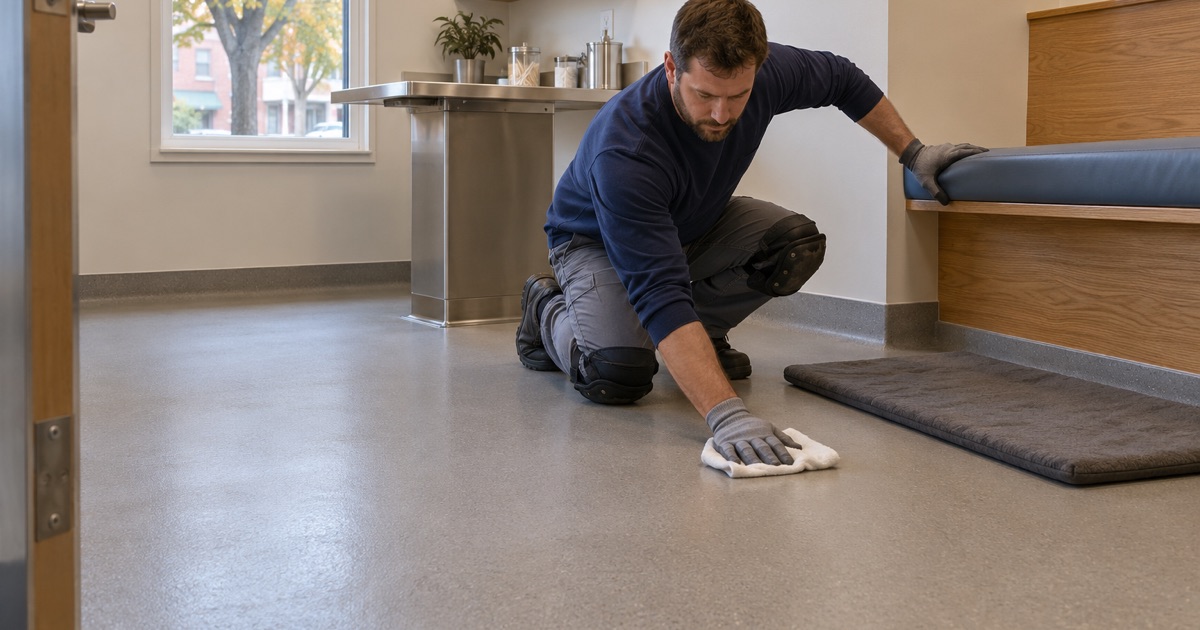
Bare or worn concrete is porous, and tile carries a grid of grout lines that hold liquid, hair and residue below the surface a cloth reaches. On either one, a quick wipe moves the problem around rather than lifting it. A sealed resin floor with a continuous topcoat leaves nothing below the surface, so a single pass with a mop or cloth reaches all of it.
The floor-to-wall corner matters as much as the open floor. An integral cove base carries the coating a few inches up the wall in one piece, so the joint where scent and cleaner collect along a baseboard is simply not there.
Drying fast and letting the cleaner clear
A nonporous floor dries from the top in minutes because no liquid has soaked in to wick back out. That shortens the gap between wiping a room and airing it, and it keeps a damp floor from holding the cleaner’s smell longer than it should.
The cleaner itself is part of the decision. We ask which products the practice actually uses and at what dilution, and we check them against the topcoat’s chemical resistance data before we recommend one. A low-odor cleaner only helps if the topcoat tolerates it day after day without dulling or softening.
Working around a clinic’s hours
A practice keeping weekday hours, as the Chestnut Street hospital does from 7:30 a.m. to 5:00 p.m. Monday through Friday, has evenings and weekends when exam rooms sit empty. We phase clinic floors around those windows, often a room or two at a time, so the practice keeps seeing patients while the work moves through the building.
Cure schedules follow slab temperature and dew point, not a calendar date, and a room is not handed back until the coating has cured to the manufacturer’s schedule and the room has been aired. We also pick products inside the Illinois VOC limits for floor coatings, which bind whoever applies them.
No Grout, No Seams, a Topcoat Built for Constant Wipe-Downs
A floor that is wiped dozens of times a day wears differently from one that is swept once a week. The system has to bond hard to the slab, stay continuous at every edge and carry a topcoat matched to repetitive wet cleaning.
Preparing the slab so the coating stays
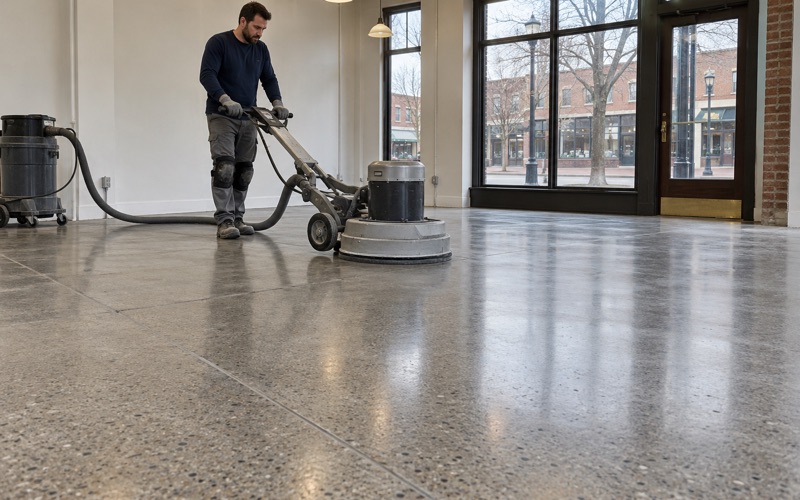
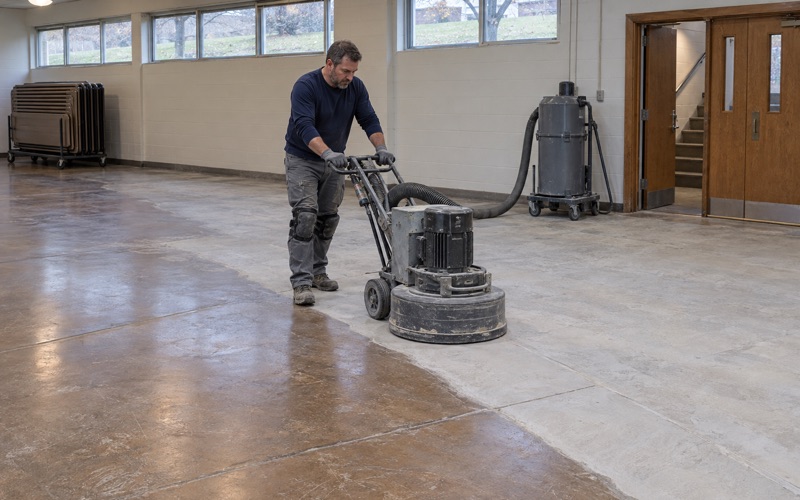
Every slab we coat is opened with a diamond grinder or a shot blaster, never an acid etch, to give the coating a measurable profile on the ICRI CSP scale. Before that, we map cracks, spalls and any old coating, and we say so when a slab needs repair before it should be coated at all.
Moisture is tested before the price is final, with ASTM F1869 calcium chloride kits or ASTM F2170 in-situ relative humidity probes depending on the slab. Moisture vapor pushing up through concrete is the most common reason a coating lets go, and it is also the first exclusion we explain in any coating warranty.
The body coat and the topcoat
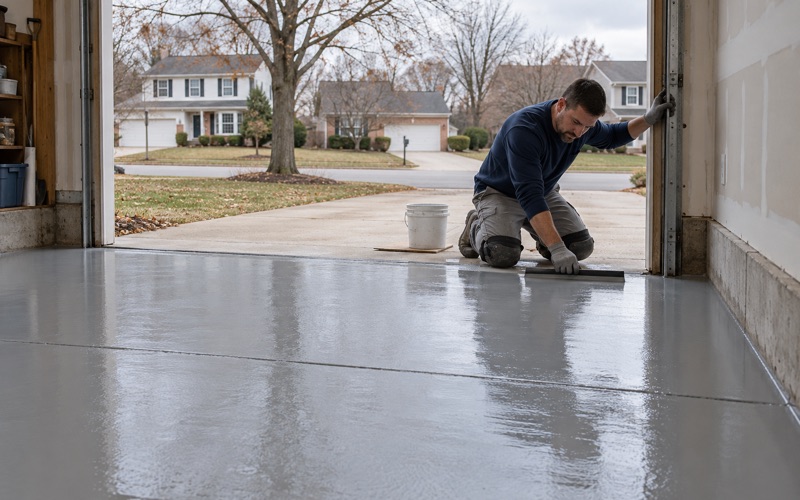
A 100% solids epoxy body coat builds a dense, nonporous layer with no seams across the room. Over it goes a polyaspartic or urethane topcoat, selected for resistance to the cleaners in use and for a finish that shows when it has been wiped and when it has not. Our proposal names the product line, the number of coats and the finished thickness, so the floor can be checked against the quote.
Texture without a slogan
A floor that is wet several times an hour needs some grip for the staff crossing it. We specify slip resistance by the broadcast and the topcoat used, often a fine quartz aggregate, and we keep the texture fine enough that a cloth does not snag on it. The same guidance that covers scent also advises against placing animals on cold, slippery surfaces, which is one more reason to settle the texture in writing.
Pet Rooms, Mudrooms and Garages in Hinsdale Homes
Most of the floors we are asked about in Hinsdale are residential. The village is 89.9 percent owner-occupied, and single-family detached houses make up most of its housing, so the dog room, the back-door mudroom and the attached garage are where the wipe-down logic usually lands.
Rooms where the dogs and cats live
A laundry room that doubles as a dog room, a mudroom where muddy paws come in, or a corner that holds a litter box all ask the same thing an exam room does on a smaller scale: wipe once, dry fast, keep odor out of the floor. In a house with both a dog and a cat, a seamless floor with a coved edge makes it easier to keep one animal’s scent out of the other’s space.
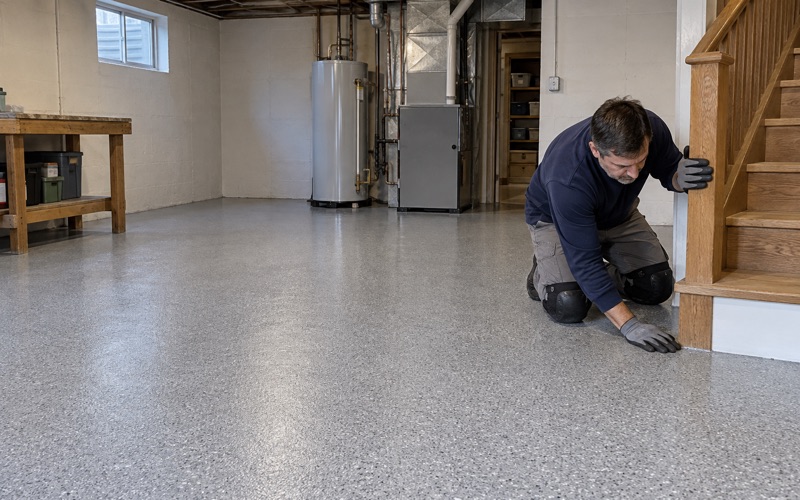
We size the system to the room. A basement dog room may need a moisture-mitigation primer under the body coat, while a ground-floor mudroom over a dry slab may not, and the moisture test decides which.
Garages that see salt and paws
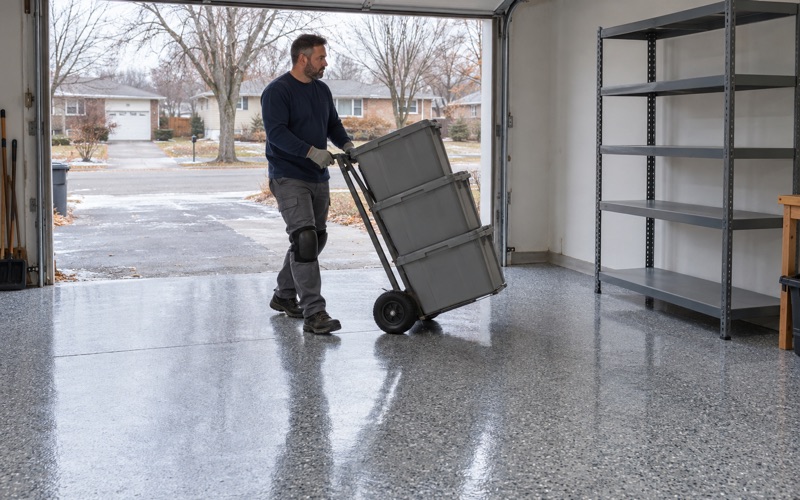
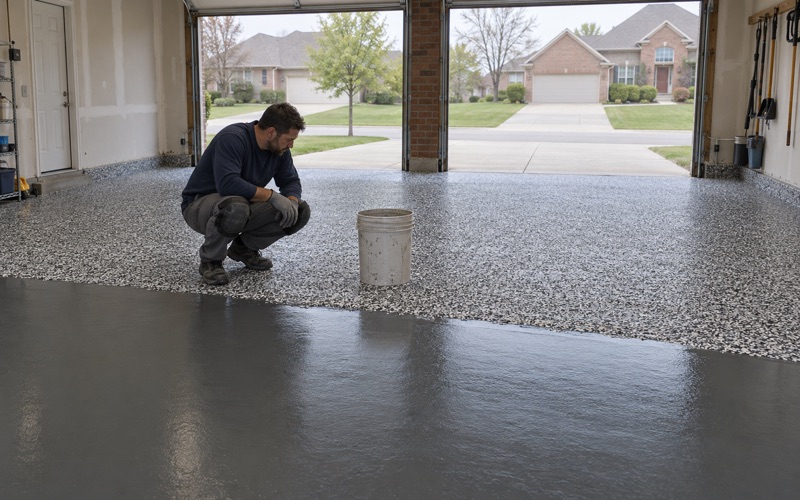
Where the dog comes and goes through the garage, the floor also carries winter brine and rock salt off the tires. We choose garage systems that stand up to that salt, usually an epoxy base with a vinyl flake broadcast and a polyaspartic topcoat, so slush and paw prints wipe off the same way they would indoors.
An unheated garage in deep winter is told to wait. When the slab is too cold or too close to the dew point, the coating will not cure properly, and we would rather move the date than install a floor that fails in spring.
Basements, contracts and permits
A basement floor is read for past water before anything else, because a coating does not stop seepage or sewer backup. Home jobs over the state threshold get a written contract and the Illinois consumer-rights pamphlet before grinding starts, as the Illinois Home Repair and Remodeling Act requires.
Permit questions go to the Village of Hinsdale Community Development department, and we check them before the job is scheduled rather than after. Grinding dust is captured at the machine with a vacuum, never rinsed toward a floor drain.
- 20+ Years in Business
- Moisture Tested Before Pricing
- Free Written Estimates