
Wheaton Epoxy Flooring installs flake epoxy floor systems in Wheaton, IL, serving surrounding cities including Winfield, Warrenville, Hinsdale, Wood Dale and Bensenville, and has spent more than 20 years refining how they go down. Flake is the most popular finish for garages because it combines a decorative look, light texture and the ability to hide dust and slab blemishes.
A flake floor is built in layers. A pigmented 100% solids epoxy base coat goes onto a ground slab, vinyl flake is broadcast into the wet base, the excess is scraped and vacuumed off once it cures, and a clear topcoat locks the flake in. The flake adds thickness and texture as well as color, which is why a full broadcast floor feels and wears differently from a single coat of paint.
As with every system we install, the slab is opened with a diamond grinder or shot blaster, tested for moisture as part of the written scope and mapped for cracks and old coatings first. The proposal names the product line, the flake blend and size, the number of coats and the finished thickness.
Choosing Flake Blends and Sizes
Color Blends
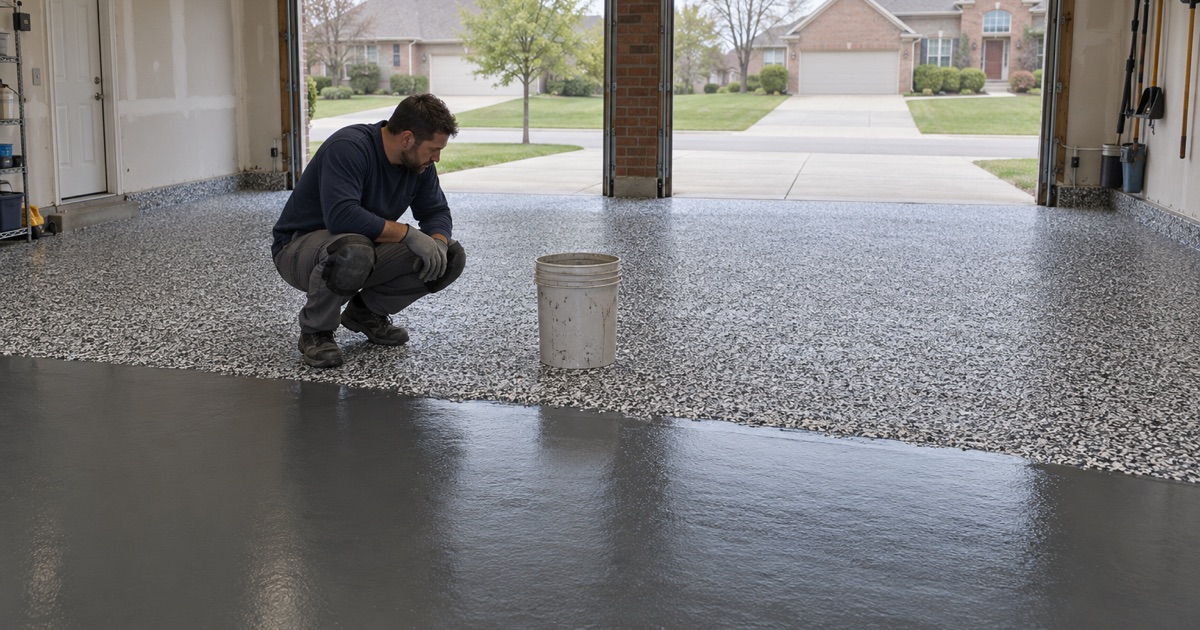
Flake comes in blends of several colors mixed together, from soft grays and tans to high-contrast mixes with black, white and accent colors. Lighter blends brighten a dark garage or basement, while mid-tone blends hide dust and tire marks better. We bring physical sample boards so you can see each blend under your own lighting.
The base coat color matters too, especially with a partial broadcast where it shows through. Even under a full broadcast, a base coat close to the dominant flake color makes small gaps in coverage disappear.
Chip Size
Flake is sold in several chip sizes. Larger chips give a bold, speckled look that stands out in a showroom garage, while smaller chips blend together into a fine, granite-like texture that looks calmer in a basement or office. Chip size also changes how the surface feels underfoot once the topcoat is on.
Full or Partial Broadcast
A full broadcast covers the base coat until no color shows through, which hides the most and builds the most texture and thickness. A partial broadcast scatters flake lightly over a visible base color for a cleaner, more minimal look. For garages, we usually recommend a full broadcast because it hides dust, salt residue and minor imperfections between cleanings.
How a Flake Floor Is Built
Grinding and Repairs
Flake hides cosmetic problems, not structural ones. Cracks, spalls and pitting are routed, filled and ground flush before the base coat, and old paint or coatings are ground off completely. Grinding dust is captured at the machine with a vacuum, so it stays out of the house and away from floor drains and storm inlets.
Oil-stained areas are degreased and ground until clean concrete shows. A flake floor bonded over oil will lift in patches no matter how good it looks on the first day.
Base Coat and Broadcast
The base coat is applied at a controlled thickness, and flake is thrown into it while it is still wet. With a full broadcast, flake is added until the surface is saturated. The timing matters: broadcasting too late leaves bare spots where the flake does not stick, and broadcasting too early can let flake sink and leave a thin, uneven layer.
Scraping and Topcoat
Once the base cures, loose flake is swept up and the floor is scraped to knock down chips standing on edge. After vacuuming, the clear topcoat goes on. Many of our garage floors use a polyaspartic or polyurea topcoat, which resists ultraviolet ambering and stands up well to hot tires and road salt.
The topcoat thickness decides how smooth the final surface feels. One coat leaves more texture from the flake; a second coat smooths it out and adds protection. We agree on the finish texture with you before the job starts.
Where Flake Floors Work Best
Garages Through a Wheaton Winter
Garages take road brine, rock salt, slush and hot tires from late fall to spring. A full flake floor with a hard topcoat keeps salt on the surface where it can be squeegeed out, and the flake pattern hides the film of residue between cleanings. The light texture also helps grip when the floor is wet.
If the garage is unheated, installation is planned for a stretch of weather when the slab stays warm enough for the coating to cure. Coating a cold slab risks a soft finish and a weak bond, and an unheated garage in deep winter is told to wait.
Basements and Lower Levels
In basements, a flake floor gives laundry rooms, workshops and family rooms a durable, finished look. Basement slabs are read for past water and tested for moisture first, and a damp slab gets a moisture-mitigation primer. A coating does not stop seepage or sewer backup, and we explain the warranty exclusions for moisture before the job is sold.
Commercial Spaces
Flake floors suit locker rooms, break rooms, retail back rooms, auto service areas and showrooms. They hide wear well and clean easily. In commercial settings, we choose topcoats for the cleaning products the space uses and add texture where floors may be wet.
Work in occupied businesses is phased around opening hours, with overnight and weekend windows where a space cannot close. Fast-curing topcoats shorten the time each area is out of service.
Caring for a Flake Floor
Cleaning and Winter Care
Sweep or dust mop regularly and clean with a neutral cleaner and a soft mop. In winter, push salty slush out of the garage every few days so grit does not wear the topcoat. Avoid harsh acids and abrasive pads, which can dull the finish over time.
Long-Term Upkeep
The flake layer sits under a clear topcoat, so wear in traffic lanes can usually be refreshed by cleaning, abrading and recoating the topcoat. That restores protection and gloss without redoing the whole system, which keeps the floor looking new for longer.
- 20+ Years in Business
- Moisture Tested Before Pricing
- Free Written Estimates