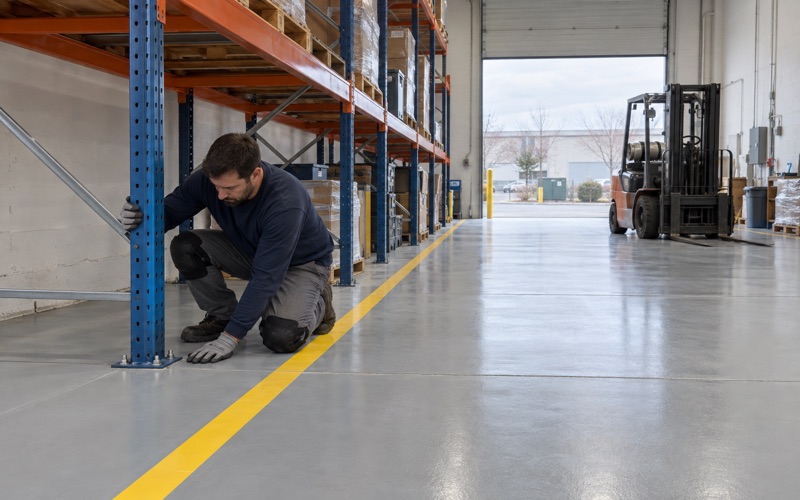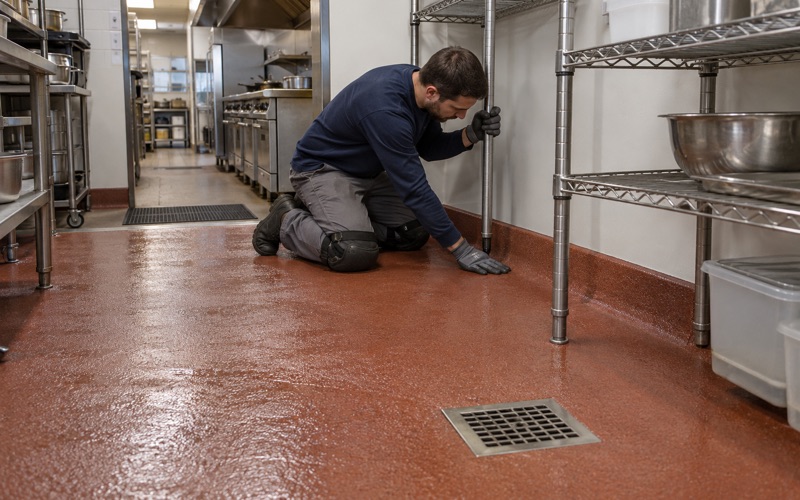
Wheaton Epoxy Flooring has spent more than 20 years on epoxy flooring in Chicago Ridge and the surrounding southwest suburbs, and many of the shop floors we are asked about share one feature: steel gas cylinders standing on the slab. Where cylinders live, the floor gets planned around them before anyone picks a color or a flake blend. That order matters, because the storage spots, the cart route and the clearances decide where a coating takes its hardest wear.
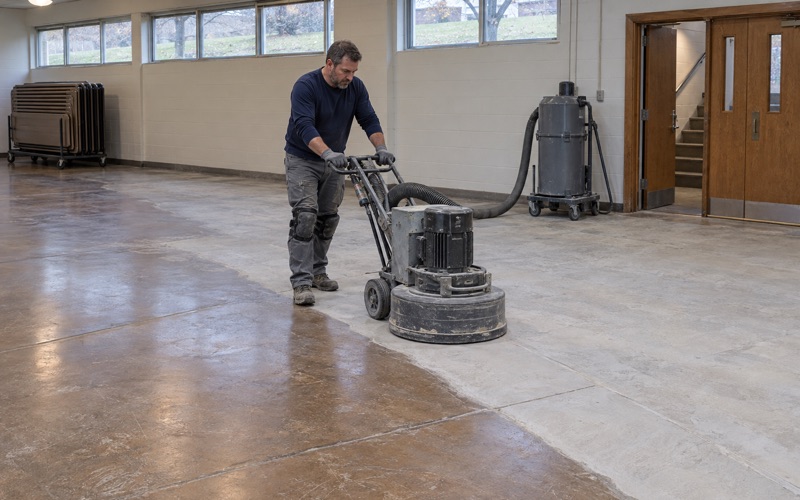
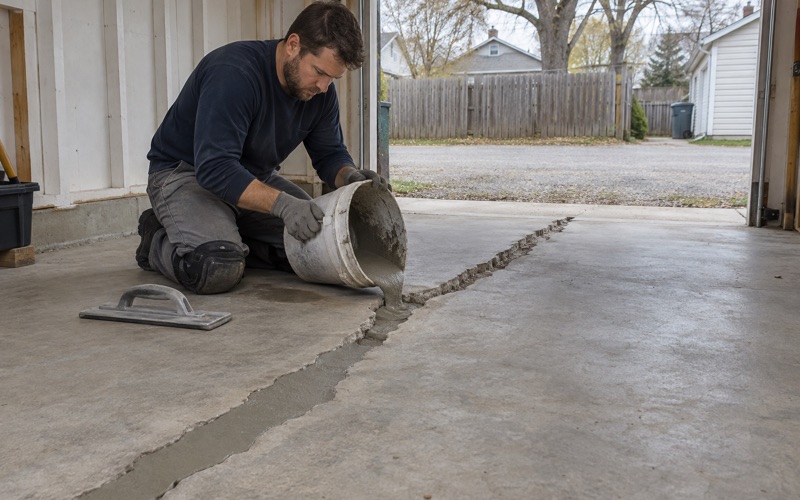
Our part of the job is the slab itself. We open every floor with a diamond grinder or a shot blaster rather than an acid etch, and we map cracks, spalls and old coatings before pricing so we can say plainly when the concrete needs repair or replacement first. The written proposal names the product line, the number of coats and the finished thickness, which lets an owner hold the finished floor up against the quote.
What we do not do is stand in for a safety program. A coating can show where cylinders belong and absorb the scuffs they leave, but chains, carts, separation distances and storage rules stay with the owner. The sections below explain how those rules shape a coated floor, and where the coating’s job ends.
Assigned Cylinder Places on a Coated Shop Floor
A Welding-Gas Counter on Virginia Avenue
Chicago Ridge has a welding-gas counter of its own. The Linde Welding Gas & Equipment Center at 10170 Virginia Avenue lists acetylene, argon, carbon dioxide, hydrogen, nitrogen and oxygen among its gases, alongside welding wire, rods, electrodes, abrasives and helmets. It is open on weekdays and closed on weekends, and the address sits in the village’s Virginia Avenue light-industrial pocket in Worth Township.
We have no connection to that store and have never seen its floor or how it keeps its stock. The point is simpler than that. A counter like this one means fabrication shops, maintenance crews and home welders carry full cylinders back to their own slabs, and those slabs are the floors we get called to coat.
Assigned Places, Away From Stairs and Gangways
OSHA’s standard for oxygen-fuel gas welding and cutting says cylinders stored inside a building belong in a well-protected, well-ventilated, dry location. They go in definitely assigned places away from elevators, stairs or gangways, where they will not be knocked over or damaged.
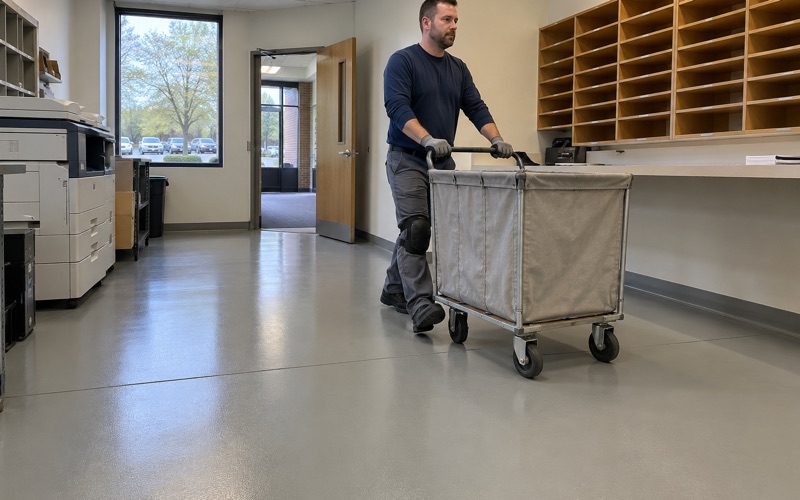
On a floor plan, that means fixed spots instead of wherever the last tank happened to be set down. Before we price a shop coating, we ask the owner to walk us through where cylinders stand today and where they ought to stand. That decision sets where the striping goes, which areas of the slab need the closest attention in prep, and how the cart will travel between the door and the rack.
Marking Spots and Cart Lanes Into the System
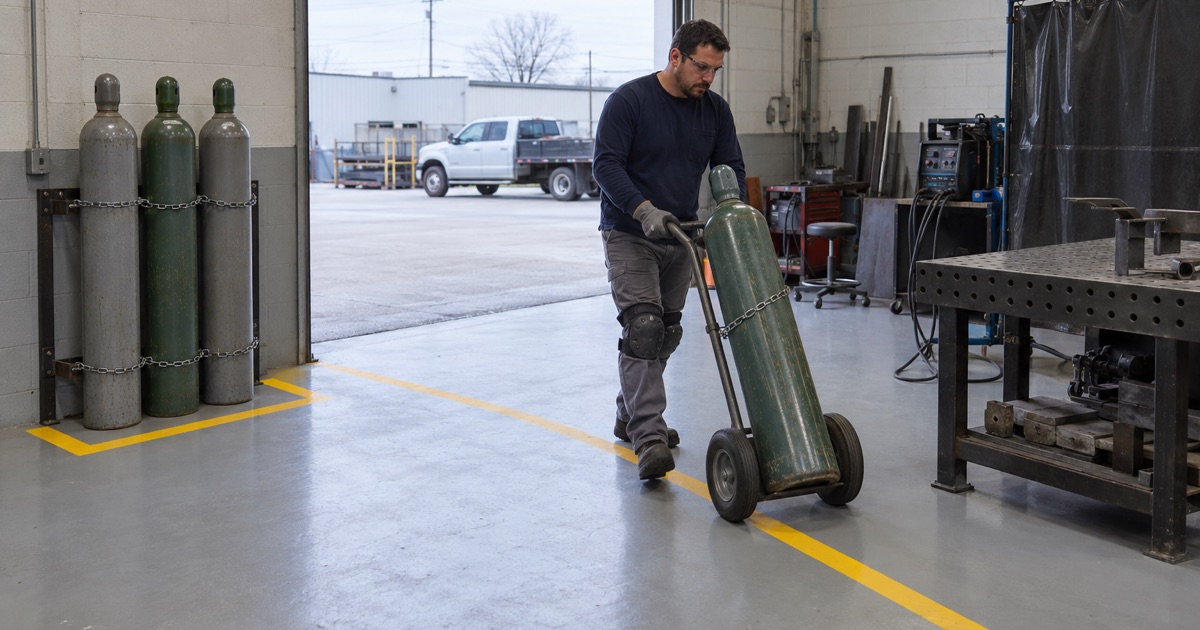
Once the assigned places are settled, each storage spot can get a contrasting color block or a painted outline, and the cylinder cart can get a marked lane of its own. We lay those markings into the system and seal them under the topcoat rather than taping them on afterward. Lines protected by a clear polyaspartic or polyurea topcoat wear far more slowly than floor paint on bare concrete.
Those markings are a reminder, not a control. They tell a new hire where a tank goes, but the chain, the wall bracket and the habit of returning every tank to its spot are what actually keep cylinders upright. If the shop later moves its rack, a section can be ground and recoated without redoing the whole floor.
Looking for epoxy-flooring closer to Worth? See Epoxy-Flooring in Worth.
Twenty Feet or a Five-Foot Wall Between Oxygen and Fuel Gas
What the Separation Rule Asks
The same OSHA standard requires oxygen cylinders in storage to be separated from fuel-gas cylinders and combustible materials by a minimum of 20 feet. The alternative is a noncombustible barrier at least 5 feet high with a fire-resistance rating of at least one-half hour. Cylinders also need to stay at least 20 feet from highly combustible materials, and no rack location is right if a tank there can be knocked over.
That distance is easy to lose in a two-bay shop or a long residential garage. An oxygen tank and an acetylene tank that ride together on a torch cart while a job is underway often cannot stand together in storage. Which arrangement a shop uses is a safety decision the owner makes, often with the gas supplier or an insurer, and it is not ours to make.
Drawing the Separation Before Choosing Colors
We put the separation onto the floor plan before any color is chosen. If the shop goes with distance, the oxygen zone and the fuel-gas zone are marked at opposite ends of the room with the cart lane running between them. If it goes with a barrier, we need to know where the wall or partition will be anchored so the coating can be finished cleanly around it, or so the barrier can go in after the floor has cured.
A coating does not satisfy the separation rule and never replaces a barrier. It only makes the chosen layout visible, which helps on a floor several people share and that new equipment tends to crowd over the years. When the layout changes, the marking should change with it, and we would rather recoat a corner than leave a stripe that points to the wrong place.
Carts, Chains and the Base Ring
Never Dragged, Rolled or Walked
A Linde group safety data sheet for compressed argon, which is a general product sheet rather than anything issued by the Chicago Ridge store, puts the handling rule bluntly: do not drag, roll, slide or drop cylinders. It says to use a trolley or hand truck even for short distances, and to secure cylinders in an upright position at all times. OSHA adds that cylinders must never be used as rollers or supports, whether full or empty.
Those rules exist to protect the valve and the cylinder, and they protect the floor as a side effect. Walking a tank across a room on its bottom edge puts its full weight on a narrow steel rim, which is exactly the kind of point load that cuts into a coating. No coating is gouge-proof under a dragged cylinder, so we treat the cart as part of the floor’s care plan.
Rust Rings Where Cylinders Stand
The same data sheet warns against storing containers in conditions likely to encourage corrosion, and OSHA asks for a dry storage location. On a garage or shop floor, a steel cylinder base left standing in tracked-in water or salt melt can rust and print an orange ring into the topcoat. That stain is usually the first sign that a storage spot stays damp.
Where a room allows it, we suggest putting the assigned spots away from the paths winter melt follows toward a drain or the door. We finish those spots with a topcoat that wipes clean, so a wet base gets noticed and dried rather than left for weeks. Our garage systems are also chosen to hold up against the brine and rock salt that ride in on tires all winter.
Scuffs, Not Gouges
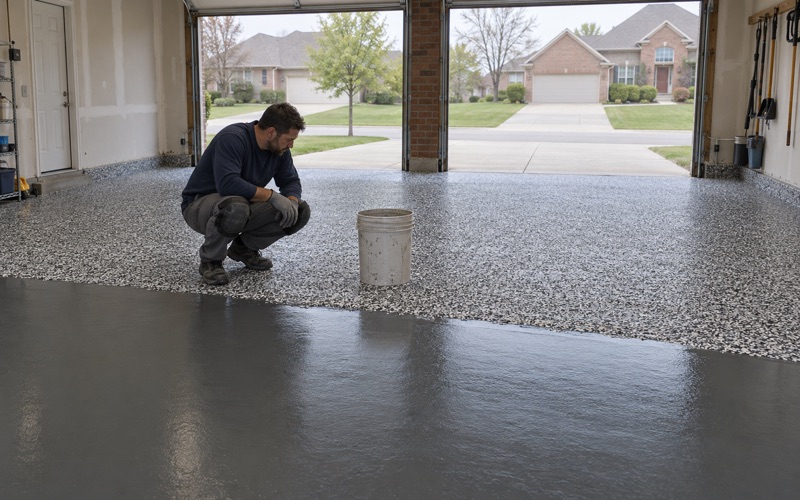
With carts and chains in place, a coated cylinder area should expect scuffing rather than gouging. Base rims rub as tanks are swapped in and out, and the cart lane collects tire marks and grit from the street. A light scuff in a broadcast floor is cosmetic and cleans up; a gouge reaches the concrete and needs a repair.
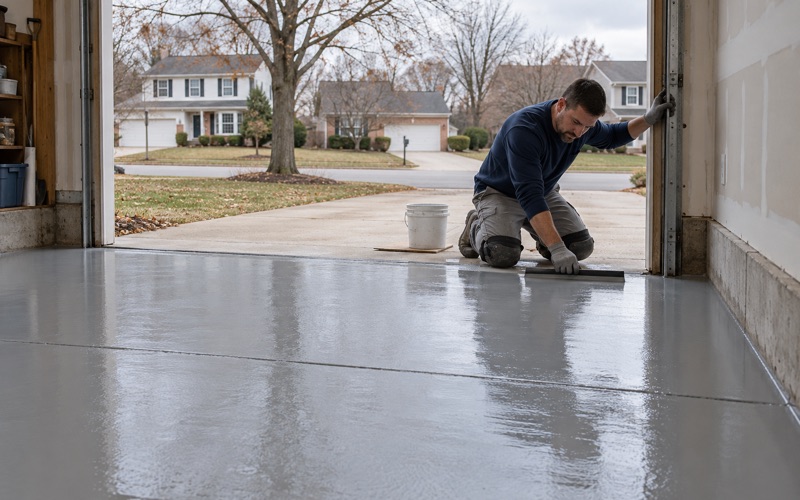
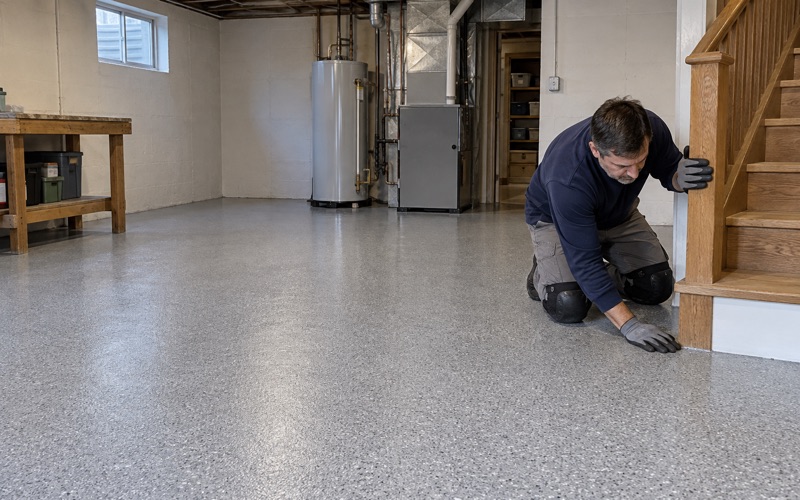
For that kind of wear we lean toward a 100% solids epoxy base with a quartz aggregate or vinyl flake broadcast, locked down under a polyaspartic topcoat. It all goes over a surface the grinder or shot blaster has opened to the right ICRI CSP profile, so the base coat has something real to grip. The broadcast and topcoat also set the slip resistance, and we specify that by product rather than promising it as a slogan.
Welding Cylinders in a Chicago Ridge Garage
A Home Welder’s Slab
Not every cylinder lives in an industrial building. Most of the village’s housing was built between 1960 and 1989, and a garage from that era may hold a MIG welder with an argon or carbon dioxide bottle beside it. The same habits make sense at home as in a shop: one assigned spot, the bottle chained upright, kept clear of the steps into the house, and moved on a hand truck.
A garage slab of that age has usually spent decades under cars and may carry old paint or sealer. We map those coatings and any cracks before quoting, and we grind failing layers off rather than coating over something that is already letting go. If the slab is too far gone, we say so before anyone spends money on a coating.
Moisture, Temperature and Cure
A moisture test is written into the scope before the price is final, using a method such as the ASTM F2170 in-situ relative humidity probe or the ASTM F1869 calcium chloride test. Cure timing follows slab temperature and the dew point spread at the surface rather than the calendar. An unheated garage in deep winter is told to wait for conditions that will let the coating cure properly.
The warranty conversation happens before the sale, and moisture vapor is the first exclusion we name. We also explain where a coating stops helping. It does not keep a tank upright, it does not move a storage spot away from the stairs, and it is never a substitute for distance or a barrier between oxygen and fuel gas.
Registration, Permits and the Work Itself
The Village of Chicago Ridge requires every contractor to register at Village Hall before a permit is issued. A general contractor pays a $100 registration fee and provides a current certificate of insurance and a $10,000 surety or performance bond. The village’s permit sheet says construction or remodeling work on or in any building needs a permit, and it does not list floor coating as exempt.
We sort out registration and permit questions with the Building Department before the job goes on the schedule. On a home job over the state threshold, the homeowner gets a written contract and the Illinois consumer-rights pamphlet before any grinding starts. Grinding dust is captured at the machine with a vacuum instead of being rinsed toward a floor drain, and the products we use stay inside the Illinois VOC limits for floor coatings.
- 20+ Years in Business
- Moisture Tested Before Pricing
- Free Written Estimates