Wheaton Epoxy Flooring has spent more than 20 years installing epoxy flooring in Campton Hills garages and basements, and on many jobs the first thing we ask is where the floor drain goes. A coating project produces dirty water at several stages, from the degreasing rinse to the slurry a grinder can leave behind. Where that water ends up matters as much as the coating that goes down afterward.
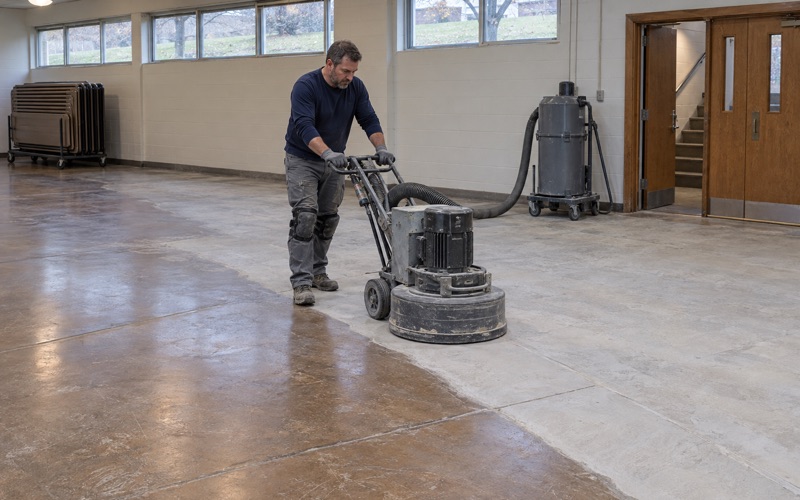
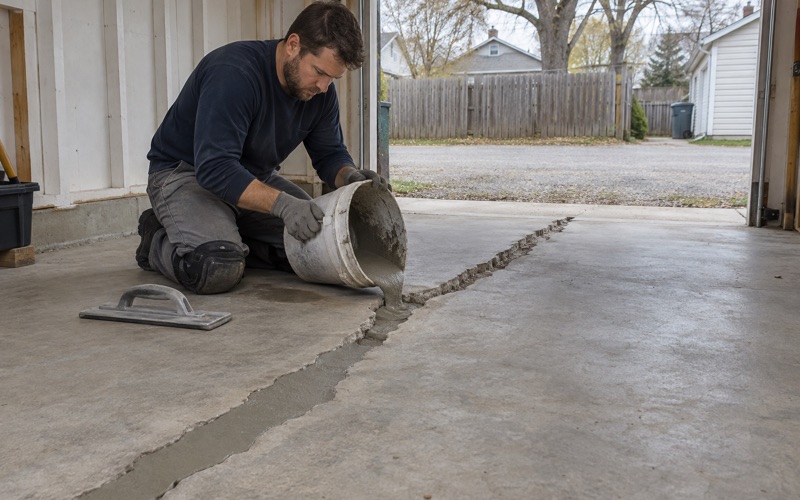
Our prep starts with a diamond grinder or a shot blaster rather than an acid etch, which already keeps one chemical rinse off the slab. We map cracks, spalls and any old sealer before quoting, and we say plainly when a floor needs repair before it is worth coating. A moisture test is written into the scope before the price is settled.
The proposal names the product line, the number of coats and the finished thickness, so you can hold the result up against the paper. We also explain what a coating warranty leaves out before you sign, and moisture is the first exclusion we name. The sections below cover the drain question in detail, because on a septic lot it shapes how we clean up every stage of the work.
Sanitary District or Septic: Knowing Which Lot You Have
Fox Mill, Fox Creek and Wasco
The village welcome booklet lists the Wasco Sanitary District for the Fox Mill, Fox Creek and Wasco areas only. Homes in those three areas send their wastewater to a district system rather than a tank in the yard. Wasco itself sits on Illinois Route 64 near the center of the village, and Campton Square, one of the newer commercial centers, is at Route 64 and LaFox and Burlington roads.
For a floor job in one of those areas, the drain question is simpler, but it does not go away. A sewer connection does not turn a degreaser, a solvent wipe or stripped coating residue into something to pour down a drain. The collection habits described further down apply on every job we run, wherever the drain leads.
The Rest of the Village
For the rest of Campton Hills, the village directs well and septic questions to the Kane County Health Department. That referral suggests many homes outside the district rely on a private well and a septic system, though we do not know which specific houses do. If you are unsure about your own lot, the county health department or your property records will settle it faster than a guess.
We raise this at the estimate, not on the morning of the grind. Campton Hills is overwhelmingly owner-occupied detached houses, built mostly from the 1970s through the 2000s, so the person booking the floor usually knows the property and lives with the result. A slab that age often carries an earlier sealer or coating as well, which adds stripping residue to the list of things that need somewhere to go.
Where Our Role Stops
We coat floors; we do not inspect, design or service septic systems or plumbing. If a drain line is slow, cracked or routed somewhere you did not expect, that is a question for the county or a plumbing professional. Our part is making sure the floor work sends nothing harmful toward the drain, not vouching for the system behind it.
Looking for epoxy-flooring closer to Bridgeview? See Bridgeview Epoxy-Flooring.
What Illinois Lets a Garage Drain Send to a Septic System
The Residential Garage Provision
The Illinois Private Sewage Disposal Code, in Section 905.20 of Title 77 of the state administrative code, sets out what a private system may receive. On residential property with a garage, floor drains may discharge directly to the private system without enlarging it. A garage drain tied to septic is a recognized arrangement, not a violation in itself.
Nearby provisions show how carefully the code limits that allowance. Floor drains where vehicles are parked may serve a private system only for vehicle wash water or melted snow, and drains in vehicle repair or service facilities must go to a public sewer or a holding tank instead. The residential allowance does not loosen the material limits that sit right beside it.
The Line on Oils, Solvents and Chemicals
Under subsection (b)(3), automotive grease, oils, solvents and chemicals shall not discharge to a private sewage disposal system. They go instead to oil, gas and grease disposal under the state’s Environmental Protection Act rules, or to an oil and gas reclamation center. The rule does not ban garage floor drains; it bars those materials from a drain that serves a septic system.
Federal advice points the same way. The US EPA’s septic guidance says never to pour oil-based paints, solvents or large volumes of toxic cleaners down the drain, because toxins can kill the organisms a septic system depends on. It adds that harmful chemicals put down a drain can also be discharged into the groundwater, which is why we treat this as a disposal question rather than a coating question.
Where Coating Waste Falls Under the Rule
A floor coating job produces several of the materials the rule names. Degreaser rinse carries the oil that came off the slab, solvent wipes carry solvent, and stripped coating residue and grinding slurry carry chemicals and fine solids that no septic tank is meant to handle. None of it resembles wash water dripping off a parked car.
That is the practical reading we work from on any lot that may be served by septic. Water and residue from those stages are collected and taken off site, and nothing from the prep goes down the drain. Routine cleaning of the finished floor is the only water we expect that drain to see from our work.
Collecting Prep and Rinse Water Instead of Washing It Down
Covering the Drain Before Prep Starts
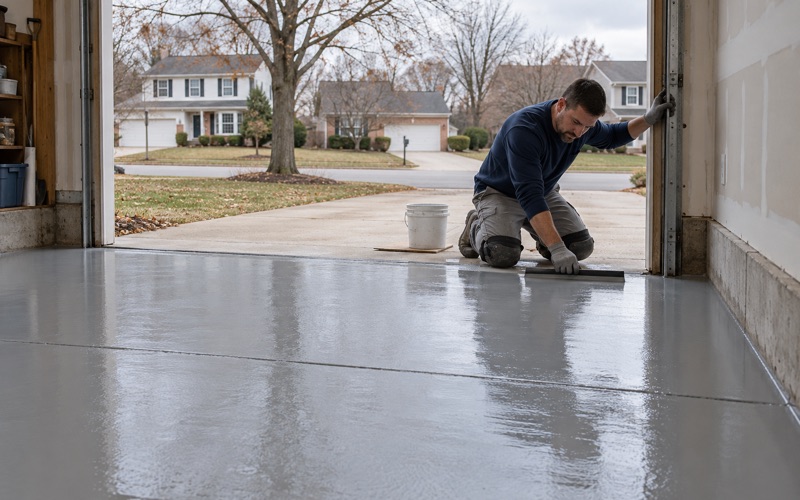
Before any grinding or degreasing, we plug or cover the garage floor drain and keep it covered through prep and every coat. Coating material that reaches an open drain does not come back out, and resin cured inside a drain body becomes its own repair job. We uncover it only once the floor is finished and cured.
Covering the drain also keeps the floor around it workable. The drain is usually the low point of a garage slab, so we feather the coating to its edge carefully rather than letting material pool and run in. That edge gets checked on the final walk-through along with the rest of the surface.
Wet Vacuum and Absorbent Pads
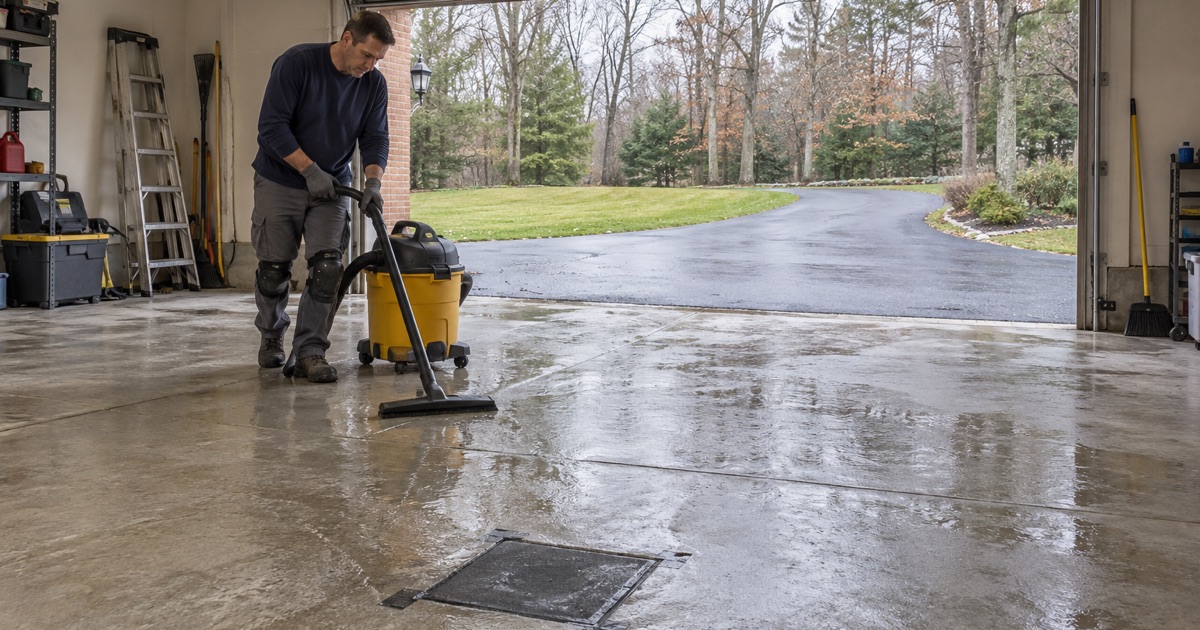
Where prep needs water, such as a degreasing rinse on an oil-stained bay, we pick it up with a wet vacuum as we go. Small spills and solvent residue are caught on absorbent pads, which are bagged and removed with the rest of the job waste. The water and the pads leave with us rather than heading toward the drain, the lawn or the driveway edge.
Grinding dust is captured at the machine by a vacuum, which keeps the profiling step dry in the first place. A dry grind with dust collection leaves far less to manage than a wet process would. The less water a job makes, the less there is to collect and haul away.
Profiling Without an Acid Etch
Acid etching is still sold as garage floor prep, and it produces exactly the kind of rinse water that should stay out of a septic system. We open every slab with a diamond grinder or a shot blaster instead, which gives the coating a real surface profile to grip and leaves no acid to neutralize and rinse away. On a septic lot, that one choice removes the largest volume of chemical wastewater the job could have created.
The profile is matched against the ICRI concrete surface profile scale for the system going down. A thin sealer and a broadcast vinyl flake system with a polyaspartic topcoat call for different profiles, and the grinder or blaster is set up for the one being installed. Getting the profile right the first time also means no second round of prep and no second round of waste.
Cleaning a Coated Garage Floor on a Septic Lot
A Mild Cleaner in Small Volumes
Once the floor has cured, routine care asks very little of you. Sweep or dust-mop the grit first, then clean with a mild cleaner in small volumes using a damp mop or a soft brush. A coated floor releases dirt easily, so there is no need for the heavy degreasers or flooding rinses that bare concrete sometimes gets.
Small volumes matter on septic because the EPA’s warning is about large volumes of toxic cleaners, not a bucket of mild solution. Keep solvent-based cleaners, paint thinners and strippers off the floor and out of the drain entirely. If something heavier spills, absorb it and dispose of it separately, the same way we handled the prep.
Road Salt and Melted Snow
Melted snow is one of the things the code expects a garage drain to carry, and a northern Illinois winter supplies plenty of it. Our garage systems are chosen to hold up to the brine and rock salt that ride in on tires, so salty meltwater can be squeegeed toward the drain without harming the surface. An occasional wash with plain water and a mild cleaner keeps salt film from dulling the topcoat.
Oil drips from a parked car are a different matter. Blot them with an absorbent pad rather than washing them toward the drain, since automotive oil is exactly what the rule keeps out of a private system. A coated floor makes that easy, because the oil sits on the surface instead of soaking into bare concrete.
Moisture, Cure and Scheduling
None of this replaces the moisture test in our written scope, because the drain question and the slab question are separate ones. A basement or garage slab is tested before the price is final, and the cure schedule follows slab temperature and dew point rather than the calendar. An unheated garage in deep winter is told to wait for conditions that let the coating cure properly.
Products are chosen inside the Illinois VOC limits for floor coatings, which bind whoever applies them. A coating seals the surface of the slab, but it does nothing for the septic system or the groundwater below, and it is not waterproofing. If the coating is part of a larger basement finish, permit questions go to the village’s Building and Zoning Department before we schedule.
- 20+ Years in Business
- Moisture Tested Before Pricing
- Free Written Estimates