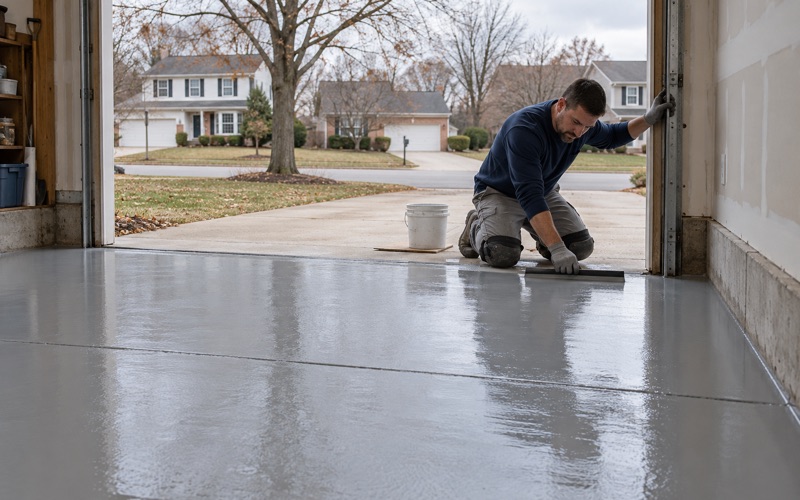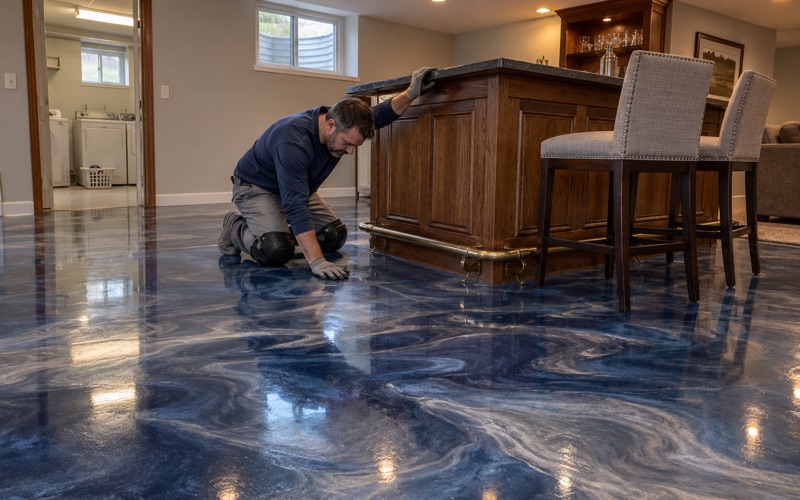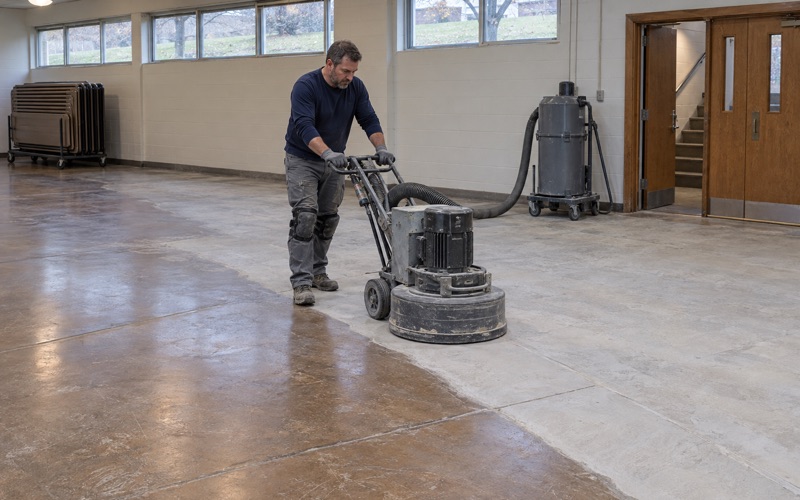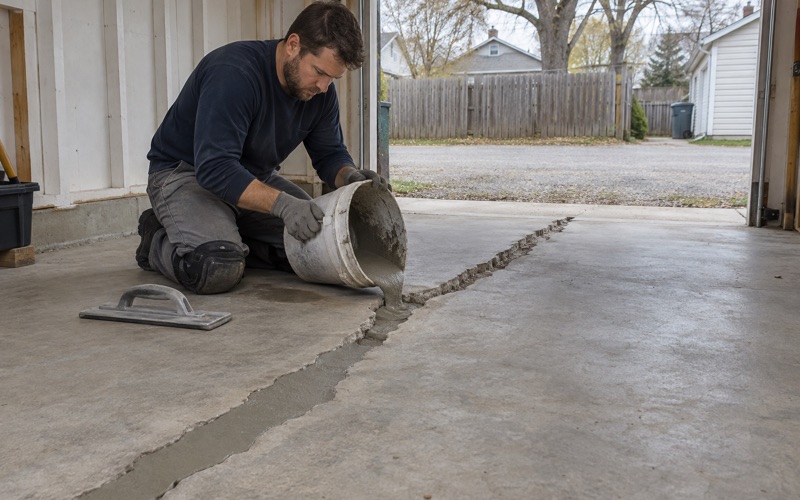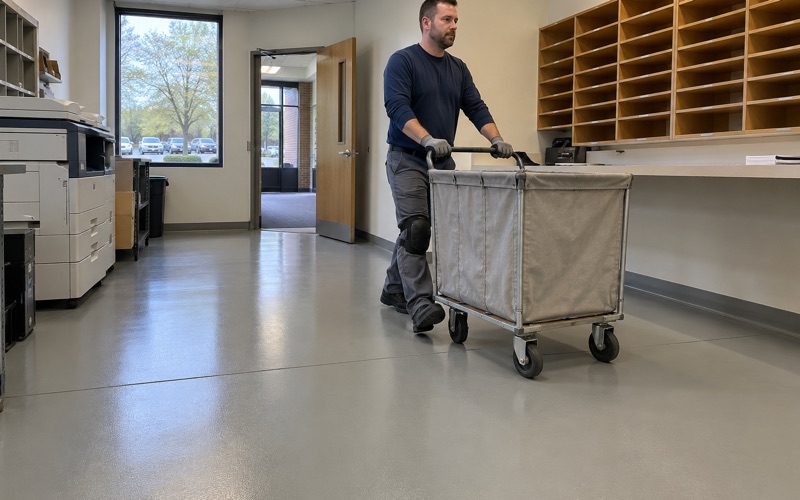
Wheaton Epoxy Flooring brings more than 20 years of work to epoxy flooring in Bellwood, from basement slabs and attached garages to small shop and service rooms. Every slab we coat is opened mechanically with a diamond grinder or a shot blaster, never an acid etch, so the resin bonds to a real profile instead of a rinsed surface. The written proposal names the product line, the number of coats and the finished thickness, which lets you hold the finished floor up against the quote.
In a house, the floor we are asked to coat is rarely empty. The water heater, the furnace, a gas dryer and sometimes a garage heater stand on that same concrete, and some of them stay lit around the clock. Those appliances change which product we choose and the order the work happens in, so we plan around them from the first walk-through.
This page explains how we handle that: what solvent vapor does near a flame, why our systems stay low-solvent, and why an appliance on an old connector is not ours to move. None of it is gas work, and we do none. Our part is the slab, and the rest of this page is about doing that part without creating a hazard next to it.
A Gas Utility on Eastern Avenue and the Appliances on Bellwood Floors
Where Nicor Gas Sits in the Village
Nicor Gas keeps an active utility site at 615 Eastern Avenue, listed by the Illinois State Fire Marshal as a fleet facility with gasoline and diesel tanks in use. The address geocodes inside Bellwood village, in Proviso Township, Cook County. We mention it for one reason: it is the utility whose gas feeds the appliances standing on many of the floors we are asked to coat here.
We have no relationship with Nicor and have never worked at that site, and the state record describes fuel tanks, not buildings or floors. What matters to a floor job is the utility’s published safety guidance for customers, which speaks directly to the space around gas appliances. Two of those rules decide how we work in a basement or a garage.
The Appliances Standing on the Slab
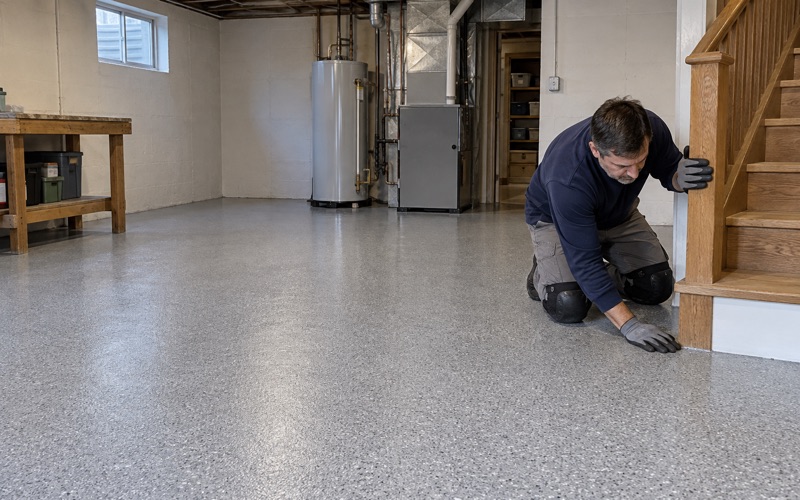
Most of Bellwood’s housing is single-family detached, and 78.4 percent of occupied units are owner-occupied. In those homes the basement usually holds the water heater and the furnace, often a gas dryer, and a garage may carry a unit heater. Each one sits on the concrete the owner wants coated, and none of it can simply be carried out of the room like a storage shelf.
Nicor asks customers to keep the space around furnaces and water heaters clean, clear and accessible, and to keep combustible material away from them. It also lists gas appliances installed less than 18 inches above the garage floor as a warning sign for a heating system. A coating crew working on its knees beside those units is in exactly the zone that guidance describes, so the plan for that zone comes first.
Looking for epoxy-flooring closer to Burr Ridge? See Epoxy-Flooring in Burr Ridge.
Heavier-Than-Air Vapor and a Pilot Light Near the Floor
What a Michigan Basement Investigation Found
Michigan’s MIFACE program investigated a 2004 death, case #04MI130, in which a 52-year-old janitor was using lacquer thinner to strip carpet glue from a concrete basement floor that was going to be painted. The vapors migrated into the mechanical room, were ignited by the water heater’s pilot light, and flashed back. The pilot sat less than 4 inches above the floor, and both basement windows were closed.
The thinner’s own label said to extinguish all flames and pilot lights and not to use the product where vapors can accumulate, such as basements. The case involved a solvent stripper, not a floor coating, and it happened in Michigan rather than here. We cite it because the chain it describes, solvent on a floor, vapor sinking and drifting, and a flame near the floor, can form in any basement with a gas water heater.
Why Vapor Finds the Pilot
Water heater manuals from makers such as Rheem warn that the pilot flame is always on and that flammable vapors cannot be seen, are heavier than air, and can be carried from other rooms to the flame by air currents. Those manuals call for the burner and pilot to sit at least 18 inches up where flammable products are stored or used, a step they say reduces the risk but does not eliminate it. Newer gas water heaters use a flammable-vapor-ignition-resistant design, but an older unit may predate it.
Floor work puts the vapor exactly where the flame is. Solvent-borne coatings, strippers, adhesive removers and solvent wipe-downs all release vapor at floor level, and a closed basement gives it nowhere to go but along the slab. Reading the room for every flame source is the first thing we do, before any product is chosen.
Low-Solvent Systems, With Flames Dealt With First
Choosing a System That Gives Off Little Vapor
Our default in a basement or garage with gas appliances is a 100% solids epoxy or a water-based system rather than a solvent-borne coating. MIFACE’s recommendations included substituting water-based, non-chlorinated products for flammable solvents, and the same reasoning applies to the coating itself.
We also pick products inside the Illinois VOC limits for floor and industrial coatings. Those limits sit in Part 223 of Title 35 of the Illinois Administrative Code, and they bind whoever applies them.
Low-solvent does not mean there is nothing that can burn, and we never present any product as fire-safe. It means far less vapor in the room during application, which is the variable we can control. The flame source is still handled separately, every time.
Old Coatings Come Off Mechanically
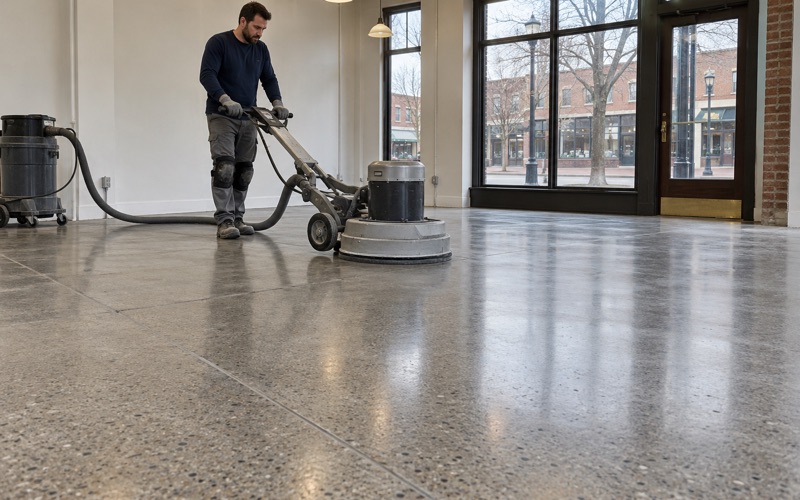
Old paint, failed coatings and adhesive residue are removed with a diamond grinder or a shot blaster instead of a chemical stripper or a solvent wash. That keeps the most dangerous step in the MIFACE case, solvent poured on a basement floor, out of the job entirely. It also produces the concrete surface profile a new coating needs to grip.
The grinder runs with a vacuum attached, so dust is captured at the machine rather than swept or rinsed toward a floor drain. That keeps fine dust out of the furnace’s air intake and off the water heater’s burner area. Cracks, spalls and patches of coating that will not come off cleanly are mapped during this step, and we say so when a slab needs repair before it should be coated.
Who Handles the Flame, and When
Before any can is opened, every lit appliance in the work area is taken out of service, by the homeowner following the manufacturer’s instructions or by a qualified HVAC contractor. We do not light, relight, shut off or adjust gas appliances ourselves. The written schedule names that step and who is responsible for it, so nobody assumes the other party took care of it.
The same schedule says when the room has been ventilated and the coating has cured enough for the appliance to come back on. Bringing it back into service belongs to the same homeowner or contractor who took it out. A moisture test is part of the written scope before the price is final, so the cure plan rests on a measured slab rather than a guess.
Do Not Slide the Water Heater: Coating Around the Footprint
Nicor’s Appliance Connector Warning
Nicor’s guidance on appliance connectors is blunt: do not move your appliance to check the connector, because connectors can easily break if moved even slightly. Moving an appliance on an older connector can cause complete failure and a gas leak, and uncoated brass connectors should be replaced immediately. Only a qualified professional should check or replace a connector, and customers are responsible for appliances and house piping beyond the meter.
For a floor crew, that rules out the easy shortcut of nudging a water heater or dryer a few inches to coat underneath it. We never move a gas appliance or touch its appliance connector. If an owner wants the floor beneath a unit coated, that is a separate decision made before the job is scheduled.
Stopping Cleanly at the Footprint
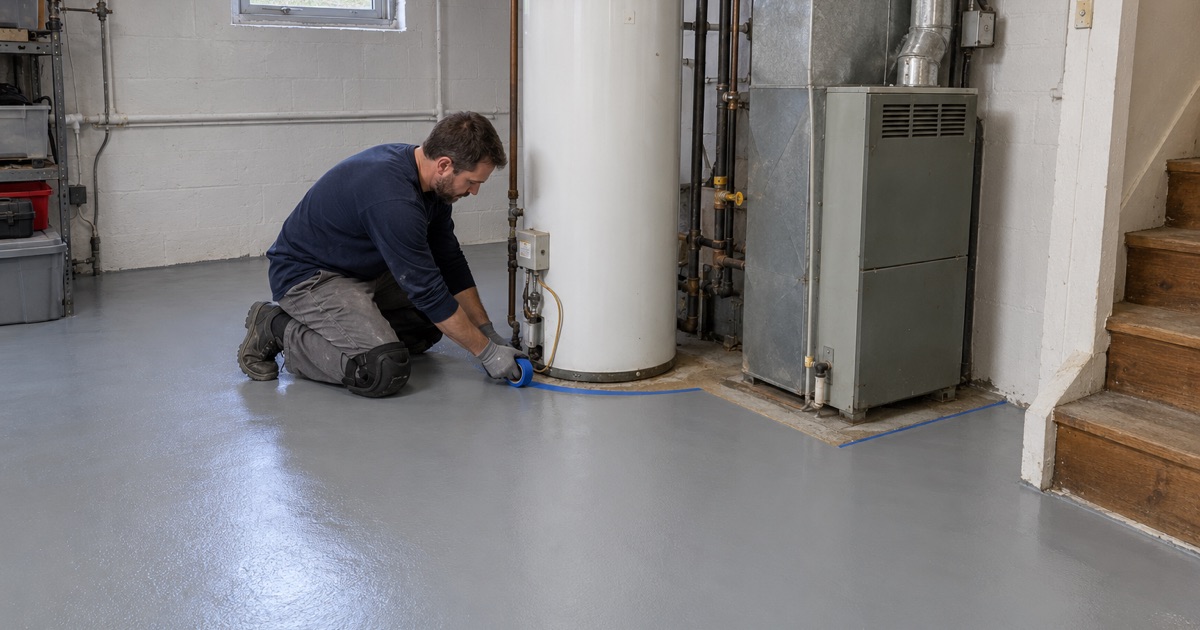
Most of the time the coating stops at each appliance. We grind and coat up to the base of the water heater, the edge of the furnace platform and the dryer’s feet, cutting a straight, sealed termination line rather than a ragged one. Flake and topcoat stay off the appliance, its legs and any gas line, and the clearance Nicor asks for around each unit stays open and accessible.
The edge is finished so it does not lift. The last few inches of slab get the same ground profile as the rest of the room, so the coating is bonded right to the line where it stops. Nicor’s safety insert says connectors belong where no one will step, sit, lean or place a heavy object on them, so our hoses, grinders and buckets stay clear of them as well.
When a Qualified Contractor Moves It Instead
Some owners want one continuous floor, or are replacing the water heater or dryer anyway. In that case a qualified HVAC or plumbing contractor hired by the owner disconnects the appliance, moves it, and reconnects it after the floor cures, and Nicor’s guidance is to replace the connector whenever an appliance is moved or replaced. We coordinate timing with that contractor so the slab is coated and cured before the unit returns.
The disconnection, reconnection and any relighting are theirs, and any permit that appliance work needs is a question for that contractor and the Village of Bellwood Building Department. Our part is the floor: the same grinding, testing and coat schedule as the rest of the room, finished to the thickness the proposal named. The result is one coating that runs wall to wall, with every gas appliance handled by the people licensed to handle it.
- 20+ Years in Business
- Moisture Tested Before Pricing
- Free Written Estimates